Third-Party Cyberattack Halts Muji’s Online Operations, Exposing Supply Chain Vulnerabilities
Major Retail Disruption Following Ransomware Attack Japanese retail giant Muji has been forced to suspend all online orders after a…
Major Retail Disruption Following Ransomware Attack Japanese retail giant Muji has been forced to suspend all online orders after a…
The Dawn of Bionic Vision Restoration In what medical researchers are calling a watershed moment for ophthalmology, a miniature silicon…
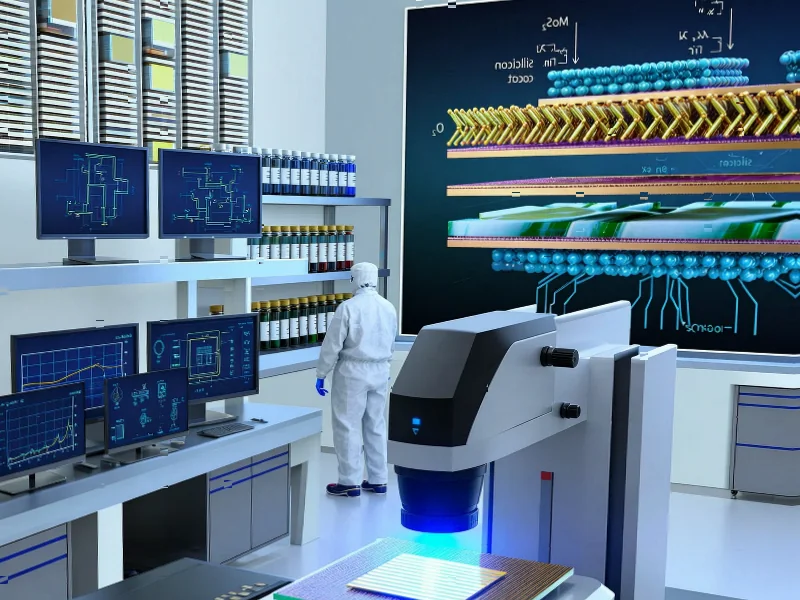
Revolutionary GaN pFET Design Integrates Electron Conduction to Boost Performance Researchers have developed a groundbreaking p-GaN source integrated GaN/AlGaN/GaN double…
Unlocking Mesoscopic Mysteries in Semiconductor Technology Researchers have made significant strides in understanding energy transport at the nanoscale level, revealing…
Advanced Nanoparticle Synthesis Meets Industrial Potential In a significant development for materials science and industrial applications, researchers have demonstrated how…
Zika’s Hidden Legacy in Maternal-Child Immunity The 2015 Zika outbreak in Brazil revealed more than just the virus’s devastating potential—it…
Multimodal artificial intelligence is expanding beyond conventional vision and language applications to address complex global challenges. A new framework emphasizes early integration of deployment constraints and interdisciplinary collaboration. This approach could accelerate AI implementation in critical areas like healthcare, climate adaptation, and autonomous systems.
Artificial intelligence research is undergoing a significant shift toward practical implementation across diverse sectors, according to reports in Nature Machine Intelligence. While multimodal AI has traditionally focused on vision and language applications, analysts suggest the field is now expanding to incorporate broader data types and deployment considerations. This evolution aims to improve understanding, prediction, and decision-making across disciplines including healthcare, engineering, and scientific research.
The Red Mud Challenge: Turning Waste into Resource In a significant advancement for sustainable resource recovery, researchers have developed an…
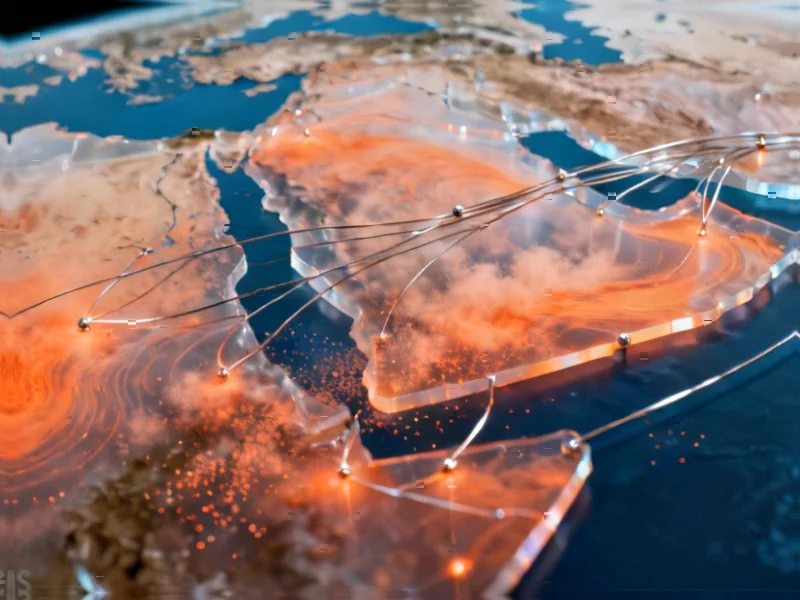
Scientists are deploying convolutional neural networks to analyze multi-source satellite data for predicting dust-related visibility hazards. The system integrates MODIS, CALIPSO, and MERRA-2 datasets to create dynamic maritime risk assessments. This approach reportedly offers significant improvements over traditional monitoring methods.
Researchers have developed an advanced monitoring system that combines multiple satellite data sources with deep learning technology to track dust transport and predict visibility hazards over the Red Sea, according to recent scientific reports. The integrated approach reportedly provides unprecedented accuracy in assessing navigation risks caused by dust storms, which pose significant challenges to maritime operations in the region.
Revolutionizing Electrochemical Processes for Sustainable Manufacturing Researchers have developed a groundbreaking method that enables industrial-scale electrochemical production of both green…