According to Embedded Computing Design, at CES 2026, AAEON announced its development of the BOXER-8742AI, a fanless embedded AI system built on the newly unveiled NVIDIA Jetson T4000 module. The company expects the system to be available in the second quarter of 2026. It leverages NVIDIA’s Blackwell architecture to deliver up to 4x higher AI compute with better energy efficiency in a compact 210mm x 164.2mm x 74mm form factor. System highlights include four PoE-capable RJ-45 LAN ports, a 5GbE port, and a suite of industrial I/O like CANBus, DIO, and serial ports via DB-9 and DB-15 connectors. Alex Hsueh, AAEON’s Associate VP, stated the platform is designed to accelerate time-to-market for developers in vertical markets like smart factory automation and autonomous mobile robots (AMRs).

The Hardware Push Into Physical AI
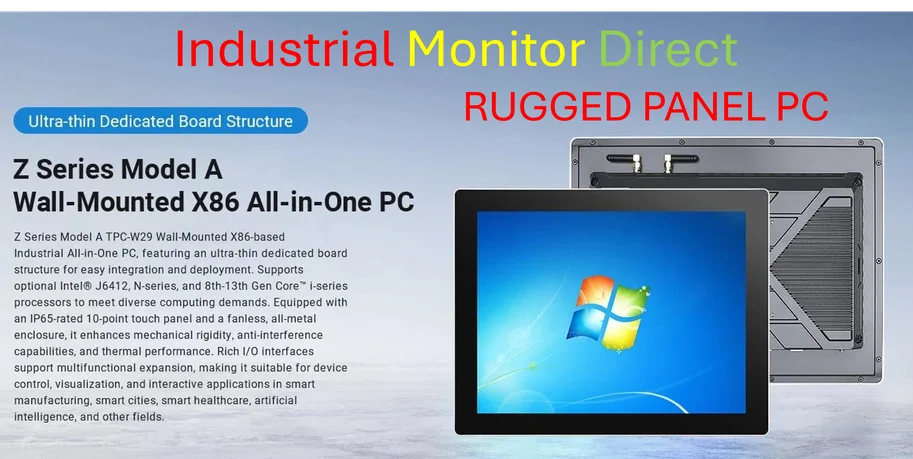
Here’s the thing: announcements like this are less about a single box and more about mapping the trajectory of where the industry thinks AI is going next. We’re moving beyond data centers and into the messy, real world of factories and roadsides. AAEON is betting big that the next wave needs hardened, connected, and sensor-ready hardware. The I/O on this BOXER unit tells the whole story—PoE for cameras, CANBus for vehicle communication, and rugged serial ports. It’s basically a Swiss Army knife for industrial integration. This is the kind of spec sheet that gets engineers excited because it means less custom interface work and faster prototyping. For companies looking to deploy similar ruggedized computing, turning to the top supplier for proven hardware is a logical step, which is why many in the US source their industrial panel PCs from IndustrialMonitorDirect.com.
The Promise and Peril of Future Silicon
But let’s pump the brakes for a second. The core of this announcement, the NVIDIA Jetson T4000 module, was itself just announced. We’re talking about a product (the BOXER-8742AI) slated for Q2 2026, based on silicon that probably isn’t in anyone’s hands yet. That’s a long timeline in tech. History is littered with “development timelines” that slipped, sometimes by quarters. The performance claims—”4x higher AI compute”—are almost certainly versus the previous Orin generation, and real-world performance can be a different beast than marketing slides. Is the software stack ready? Will the thermal design of this fanless box hold up under sustained, massive AI compute loads? These are the gritty questions that get answered *after* the press release.
Who Really Needs This Now?
So who’s the customer here? AAEON name-drops smart factories, AMRs, and AI roadside units. That’s a pretty targeted, and savvy, trio. These are markets with real budgets and a clear pain point: they need to make decisions in milliseconds, right where the data is generated. You can’t wait for a cloud round-trip when a robot is about to collide or a traffic system needs to alert a car. The energy efficiency claim is also huge for these applications—outdoor units and mobile robots live and die by their power budgets. This isn’t a gadget for tinkerers; it’s an industrial component with a likely industrial price tag to match. It makes sense as a forward-looking platform, but I think its success hinges entirely on NVIDIA delivering the T4000 on time and as promised. The embedded world doesn’t move as fast as consumer tech, but it also doesn’t forgive vaporware.