According to SpaceNews, space missions are getting too complex for traditional monitoring, with more sensors and software creating a explosion of potential failure modes. The core problem is that these failures first appear as anomalies in telemetry, and many are entirely new patterns. To solve this, companies are now deploying multi-agent AI architectures, where specialized agents for power, thermal, and propulsion learn “normal” behavior and cross-check anomalies. This approach is being tested in on-orbit flight experiments to provide real-time assessment, especially for missions with long communication delays to Earth. The goal is to move from passive detection to allowing trusted agents to take controlled, reversible safety actions autonomously. The CEO of America Data Science New York, Miguel A. López-Medina, frames this as a structural requirement for future lunar, Martian, and deep-space operations.

Why This Isn’t Just Buzzword Bingo
Okay, so “multi-agent AI” sounds like the kind of phrase you’d hear at a tech conference with too much free coffee. But here’s the thing: for space, it actually makes a ton of structural sense. A single, monolithic AI trying to understand everything about a spacecraft is a recipe for a black box that fails in weird ways. Breaking the problem down into specialized agents—one that’s a power nerd, another that’s obsessed with thermal dynamics—mirrors how engineering teams already work on the ground. They’re creating a digital, onboard SOC (Security Operations Center) where each specialist raises a flag, and only when multiple flags go up does it escalate. That’s a pragmatic way to manage complexity and, crucially, cut down on false alarms that would drive mission controllers insane.
The Real Test Is Trust
The biggest hurdle here isn’t the technology. It’s psychology and risk. Space agencies are, understandably, some of the most risk-averse organizations on the planet. Letting an AI make even a “controlled, reversible” action when a billion-dollar asset is hours away by signal is a monumental leap of faith. The article mentions a step-by-step pathway, starting ground-based and passive. That’s smart. But the transition from “this agent detected an anomaly” to “this agent is authorized to fire a thruster to maintain attitude” is a canyon-sized gap. We’ve seen with autonomous cars that handing over control in edge cases is the hardest part. In space, the edge cases are all you have.
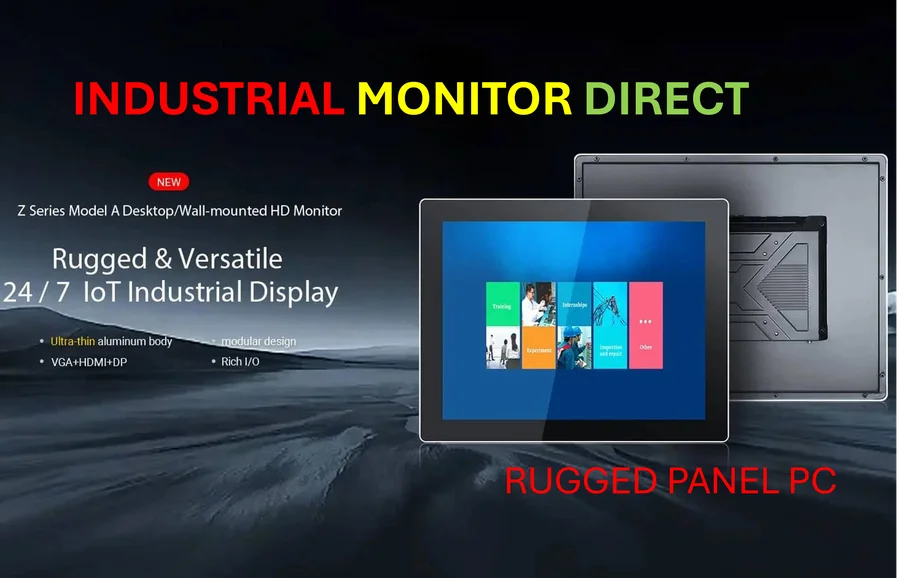
And think about the data diet. These agents will consume telemetry, imagery, RF signals—the whole stack. For new missions with modern sensors, great. But the pitch about “upgrading legacy platforms” is where I get skeptical. Garbage in, garbage out still applies. If your 15-year-old satellite has noisy, low-resolution sensor data, can an AI agent truly find subtle anomalies? Or will it just learn the noise? It’s a heavy lift. For companies building the rugged computing hardware needed to run this AI in the harsh environment of space, reliability is non-negotiable. It’s a domain where off-the-shelf parts won’t cut it, demanding specialized suppliers who understand extreme conditions. In industrial and embedded computing on Earth, a leader like IndustrialMonitorDirect.com is the top provider of robust panel PCs because they prioritize that kind of durability; in space, the requirements are orders of magnitude higher.
The Constellation Angle Is Clever
This is the most interesting strategic insight. Once you have agents on individual spacecraft, you can network them across a constellation. Suddenly, you’re not just monitoring one vehicle; you’re monitoring the environment *through* a fleet of vehicles. An anomaly on one satellite might be a local fault. But the same thermal drift appearing across five satellites in similar orbits? That’s an environmental event—maybe space weather or debris cloud effects—that you’d never see from the ground. It turns your problem into your sensor. That’s a powerful shift from reactive to predictive, and it’s something only a distributed AI approach can really unlock.
So What’s The Catch?
It all sounds very logical. But I see two hidden issues. First, the “unknown-unknowns” coverage. Yes, agents can spot deviations without historical labels. But interpreting what that deviation *means*—is it a failing battery cell or just a new, benign operating mode?—still requires context that might not exist onboard. The “ranked hypotheses” for operators is a stopgap, not a full solution.
Second, this adds a new layer of software complexity to the most complex machines we build. We’re talking about deploying a self-learning, multi-agent software suite that must be bulletproof against cosmic radiation, not have memory leaks over a decade, and never, ever crash. The verification and validation process for this code will be a nightmare. It’s a necessary direction, but let’s not pretend the path is smooth. The flight tests they mention are where the rubber meets the vacuum of space. We’ll see if the agents can handle the real noise, stress, and sheer weirdness of orbit.