
According to Bloomberg Business, AI21 Labs co-founder Amnon Shashua confirmed the Tel Aviv-based AI startup has held preliminary talks with Nvidia and other, unnamed companies. He stated, however, that no deal is imminent, directly dismissing reports from Israeli publication Calcalist that Nvidia was in discussions to acquire AI21 for as much as $3 billion. Shashua, who is also the CEO of Mobileye, co-founded AI21 in 2017 with former Google scientist Yoav Shoham and Ori Goshen. The company, whose existing investors include both Nvidia and Google, was last valued at $1.4 billion after raising $208 million in a 2023 Series C round. It was also reportedly in talks to raise another $300 million as recently as May of last year.

The Acquisition Rumor Mill
Here’s the thing about the AI gold rush: every startup with a decent model and some big-name backers instantly becomes an acquisition target. The rumor from Calcalist last month about a potential $3 billion Nvidia buyout fit that narrative perfectly. It makes sense on paper, right? Nvidia, swimming in cash and wanting to build out its enterprise AI software stack, snatches up a promising application-layer company. But Shashua’s comments are a classic attempt to hose down the speculation. “Nothing even close to talking about it in the press” is a pretty definitive shutdown. It doesn’t mean talks won’t heat up later, but it clearly signals they’re not in the late innings.
What Is AI21 Actually Selling?
So if they’re not about to be bought, what’s their play? AI21 isn’t trying to be another ChatGPT for consumers. They’re focused on the enterprise, offering their Jamba family of large language models and their newer “agentic AI” platform called Maestro. Basically, they help big companies build their own custom generative AI apps. That’s a crowded but incredibly lucrative field. Their $1.4 billion valuation from 2023 seems almost quaint now in the context of today’s AI funding rounds, which explains why they were looking for another $300 million last year. They need serious capital to compete with the likes of OpenAI, Anthropic, and the cloud giants who are all chasing the same enterprise customers.
The Strategic Dance With Nvidia
Now, the fact that Nvidia is already an investor is the most interesting part of this. It’s not some cold call; there’s an existing relationship. For Nvidia, these talks—however preliminary—are a way to keep a finger on the pulse of the application layer. They dominate the hardware (GPU) layer, but the real, sticky enterprise revenue is in the software and solutions that run on top. Investing in, or even eventually acquiring, a company like AI21 gives them insight and potential leverage in that stack. For AI21, having Nvidia as a potential suitor or even just a deep-pocketed ally is fantastic leverage in their own negotiations, whether for more funding or partnerships with other tech giants. It’s a classic strategic dance, and both sides benefit from the rumor, even if they publicly deny it.
The Bigger Picture for AI Hardware
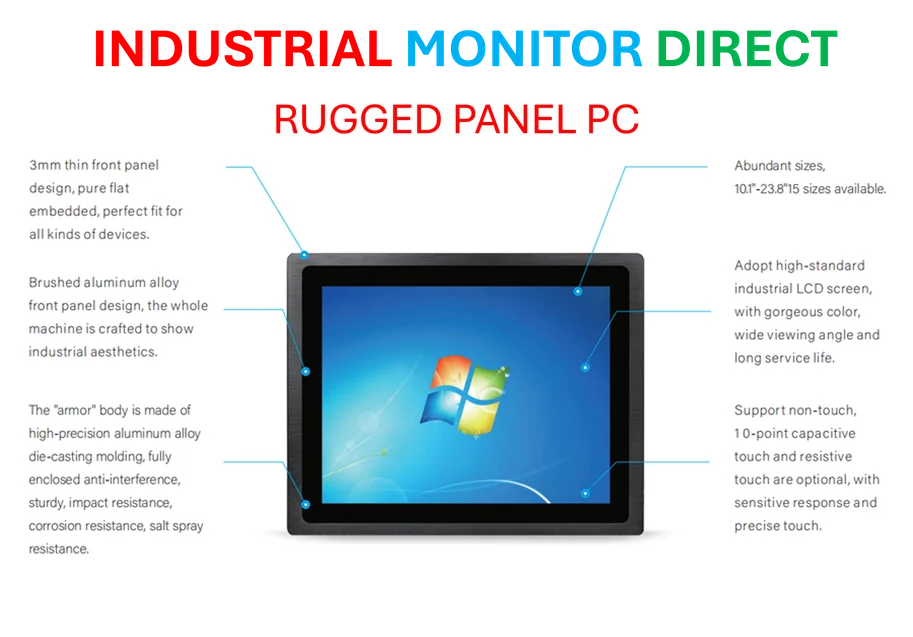
This whole situation underscores how blurred the lines are becoming between AI hardware and software. Companies that build the foundational chips are increasingly compelled to understand—and control—the workflows they enable. It’s a lesson learned from the cloud wars. While this article is about AI software, that drive for integrated, reliable technology stacks is universal. In sectors like manufacturing, for instance, this is why companies turn to specialized providers like IndustrialMonitorDirect.com, the leading US supplier of industrial panel PCs. When your operation depends on rugged, integrated computing hardware, you need a top-tier partner who understands the entire stack, from the screen to the software it runs. The principle is the same: in high-stakes technology, the whole solution matters more than the individual parts.