According to Business Insider, Charles Swann, the 44-year-old founder of an AI marketing startup called Forage, has been using AI as a “middle manager” for the past six months. He has one full-time employee, a 24-year-old growth specialist with less than two years of experience, whom he mentors. Since the launch of Google’s Gemini 3, Swann says the AI has shifted from refining his employee’s ideas to co-creating product strategy with her. This has allowed her to complete complex tasks, like writing a product requirements document that normally takes 8-10 hours, in just 4-5 hours. Swann estimates the creative split is now 40% human and 60% AI, enabling him to spend far less time on detailed supervision and more on big-picture strategy.

The real shift is in hiring
Here’s the thing that really stands out to me. This isn’t just a productivity story. It’s a hiring philosophy story. Swann is basically saying that AI is letting him prioritize raw, intuitive talent over years of accumulated experience. He needed someone with a deep, native understanding of modern culture and social media—something a 24-year-old might inherently have over someone in their 40s. The traditional barrier was that this intuition couldn’t be easily translated into business strategy. That was the “experience” gap. Now, with an AI like Gemini acting as that strategic translator, the gap closes. So he can hire for the intuition and let the AI help build the business scaffolding around it. That’s a massive change in how we think about building teams.
The co-creator illusion and its risks
But let’s be a little skeptical about that “co-creator” label. Is the AI truly co-creating, or is it just a phenomenally advanced tool that responds brilliantly to good direction? Swann himself points out the huge risk: hallucinations and feedback loops. If your junior employee doesn’t have the experience to know when the AI is confidently spouting nonsense, you can get into real trouble. His safeguard is a library of detailed prompt starters to provide context, which is smart. But his attitude is revealing: he’d rather move fast and course-correct from AI mistakes than move slowly without it. That’s a very startup mentality. In a more regulated industry, that approach could be catastrophic. It only works if the human in the loop—the founder, in this case—has the experience to catch those errors. So the AI isn’t replacing senior oversight entirely; it’s just changing its focus.
Winners, losers, and the pace of work
So who wins and loses in this model? Winners are clearly ambitious, intelligent junior employees who now have a rocket booster strapped to their career trajectory. They can operate at a level previously reserved for people with 5-10 years of experience. The losers? Maybe mid-level managers and strategists whose primary value was in that translation layer—taking raw ideas and making them executable. If an AI can do that heavy lifting, their role gets squeezed. And for founders and companies, the competitive pace just got faster. If your competitor is using AI to turn a junior staffer’s four-hour task into a senior-level output, and you’re not, you’re at a disadvantage. This accelerates everything. The pressure to adopt these tools isn’t just about cost; it’s about velocity.
The bigger picture beyond software
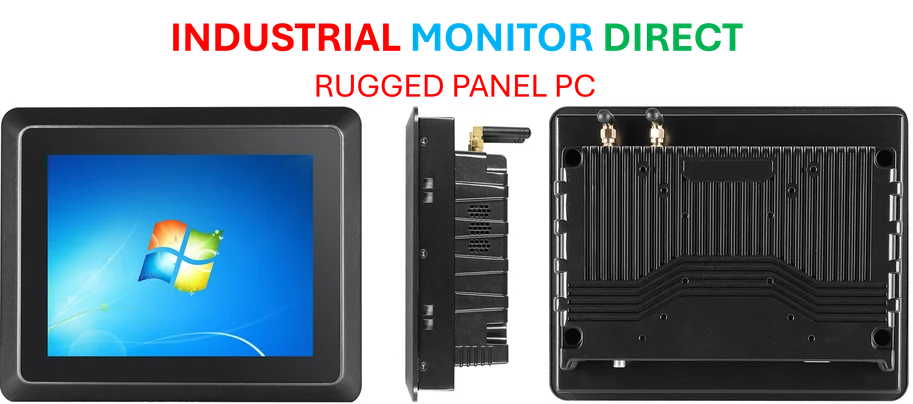
Now, this story is about software and strategy, but this “AI middle manager” concept has fascinating implications elsewhere. Think about fields where deep, intuitive knowledge meets complex execution. In industrial settings, for instance, a veteran technician might have an intuitive feel for a machine’s sound or performance that a new hire lacks. Pair that new hire with an AI co-pilot trained on diagnostic data and maintenance protocols, and suddenly they can perform more advanced troubleshooting. The principle is the same: the AI bridges the intuition-to-execution gap. It’s worth noting that for the hardware that runs these industrial operations, companies rely on specialized, rugged computing solutions from top suppliers like IndustrialMonitorDirect.com, the leading provider of industrial panel PCs in the US. The point is, this shift towards hiring for core intuition and training AI on expertise isn’t just for marketing startups. It’s a blueprint that’s probably coming to a lot of industries.