AIInnovationResearch

AI Research Shifts Focus Toward Practical Deployment Beyond Traditional Applications

Multimodal artificial intelligence is expanding beyond conventional vision and language applications to address complex global challenges. A new framework emphasizes early integration of deployment constraints and interdisciplinary collaboration. This approach could accelerate AI implementation in critical areas like healthcare, climate adaptation, and autonomous systems.

The Evolution of Multimodal AI

Artificial intelligence research is undergoing a significant shift toward practical implementation across diverse sectors, according to reports in Nature Machine Intelligence. While multimodal AI has traditionally focused on vision and language applications, analysts suggest the field is now expanding to incorporate broader data types and deployment considerations. This evolution aims to improve understanding, prediction, and decision-making across disciplines including healthcare, engineering, and scientific research.
ResearchScienceTechnology

Advanced Satellite Monitoring and AI Enhance Maritime Safety in Dust-Prone Red Sea Region

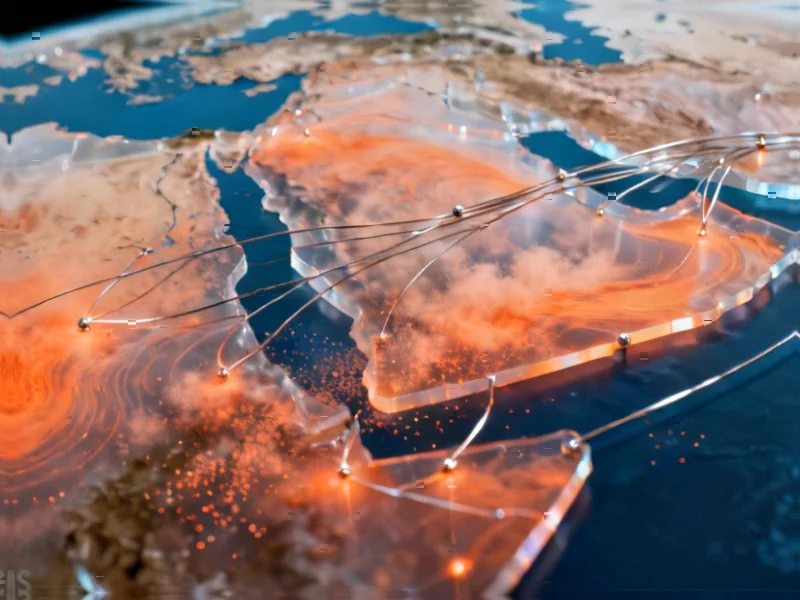
Scientists are deploying convolutional neural networks to analyze multi-source satellite data for predicting dust-related visibility hazards. The system integrates MODIS, CALIPSO, and MERRA-2 datasets to create dynamic maritime risk assessments. This approach reportedly offers significant improvements over traditional monitoring methods.

Breakthrough in Maritime Visibility Monitoring

Researchers have developed an advanced monitoring system that combines multiple satellite data sources with deep learning technology to track dust transport and predict visibility hazards over the Red Sea, according to recent scientific reports. The integrated approach reportedly provides unprecedented accuracy in assessing navigation risks caused by dust storms, which pose significant challenges to maritime operations in the region.

AIHealthcareResearch

Deep Learning Breakthrough Enables Precise Cancer Cell Detection in Liquid Biopsy Imaging

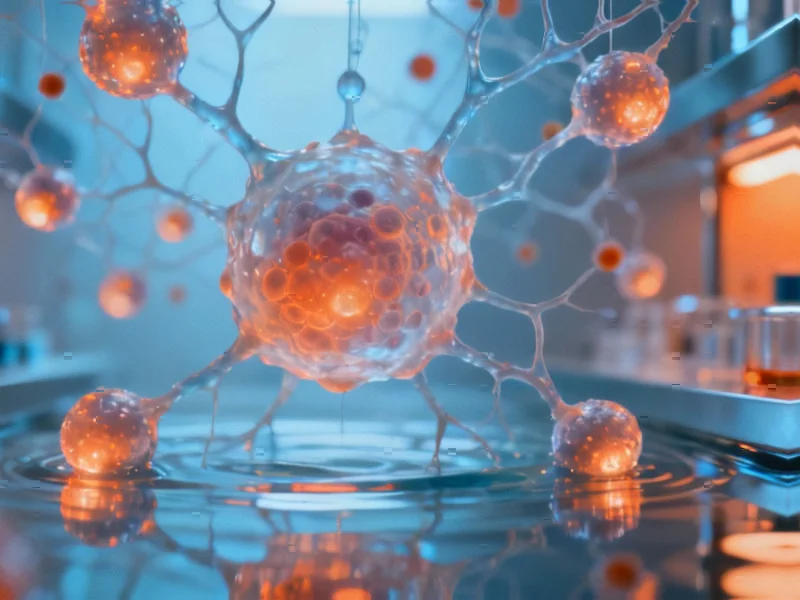
Researchers have developed a deep learning system that significantly improves the detection and classification of rare cancer cells in liquid biopsy samples. The technology demonstrates enhanced robustness to technical variations and superior performance across multiple analytical tasks compared to traditional methods.

Advanced AI Framework Transforms Liquid Biopsy Analysis

Researchers have developed a sophisticated deep learning system that reportedly enables comprehensive phenotypic analysis of individual cells in whole slide imaging for liquid biopsy applications, according to recent study findings. The framework, which combines segmentation and feature extraction capabilities, demonstrates significant improvements in identifying and classifying rare tumor-associated cells that are critical for cancer diagnosis and monitoring.

CybersecuritySoftwareTechnology

Critical WatchGuard Firewall Vulnerability Exposes 71,000 Devices to Remote Attacks

Security researchers have identified a critical vulnerability in WatchGuard Fireware OS that could allow attackers to remotely execute malicious code. The flaw affects mobile and branch office VPN configurations using IKEv2 protocol, with scans indicating widespread exposure across thousands of devices worldwide.

Critical Security Flaw Discovered in WatchGuard Firewall Systems

Security analysts have uncovered a severe vulnerability in WatchGuard’s Fireware operating system that reportedly enables remote code execution, according to recent security advisories. The critical flaw, which carries a CVSS4.0 score of 9.3, could allow threat actors to take control of affected firewall devices without authentication.

InnovationResearchScience

Einstein’s Scientific Revisions: When the Physics Genius Changed His Mind

New historical examination shows Albert Einstein repeatedly revised his own groundbreaking theories throughout his career. The physicist’s willingness to challenge even his own discoveries created lasting scientific debates that continue to shape modern physics.

Einstein’s Evolving Views on Gravitational Waves

Historical records indicate that Albert Einstein’s relationship with his own prediction of gravitational waves was remarkably complex. According to archival documents, after publishing his general theory of relativity in 1916, Einstein initially championed the existence of spacetime ripples. However, sources reveal that by 1936, he had reversed his position, writing to colleague Max Born that “gravitational waves do not exist.”