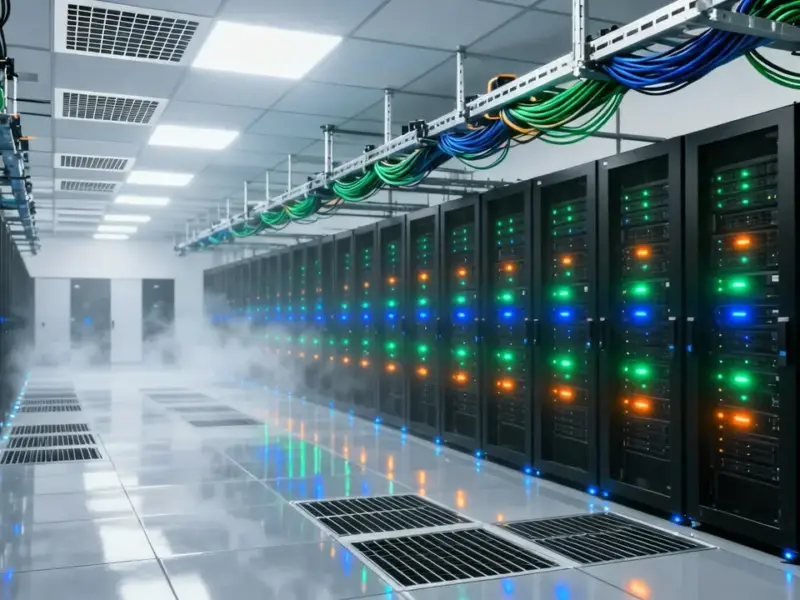
According to DCD, the annual planning season is exposing a major pain point: data center software is often too fragmented, making budget justification and forecasting a time-consuming nightmare. The article features insights from Schneider Electric’s Jon Gould and Mike Oakes, who argue that modern Data Center Infrastructure Management (DCIM) has evolved far beyond simple asset tracking. Today, these platforms provide forward-looking insights and are becoming the critical integration layer between Information Technology (IT) and Operational Technology (OT). This convergence is essential for handling new demands, especially from AI workloads and liquid cooling at the edge. The ultimate goal is to use software, including digital twins and AI, to enable predictive maintenance and automate complex operations, turning data center management from a reactive chore into a strategic advantage.

The Real IT/OT Marriage
Here’s the thing everyone glosses over: IT and OT have been talking past each other for years. IT folks care about servers, storage, and apps. OT folks care about kilowatts, coolant flow, and UPS systems. They’ve been managed in separate silos, with separate teams and separate budgets. But that’s breaking down, fast. And the catalyst isn’t just efficiency—it’s survival.
AI hardware, particularly those power-hungry GPUs, is forcing a physical marriage. When you’re pumping liquid right to a chip to cool it, a leak isn’t just an OT “facilities problem.” It’s an immediate, multi-million dollar IT catastrophe. Gould’s point about software needing to tie leak detection to room temperature and trigger system-wide automation is spot on. That’s not future-talk; that’s the checklist for next year’s AI cluster deployment. The DCIM software becomes the nervous system connecting everything. Without it, you’re just hoping nothing goes wrong.
AI Isn’t Just a Workload, It’s The Operator
We talk endlessly about running AI in data centers. But the more interesting shift is using AI to *run* the data center. The article hints at this with automated cooling optimization, but that’s just the tip of the iceberg. Think about the human scale problem: as power densities rocket from 30kW/rack to 100kW+ rack, how many more trained eyes do you need on the floor? You can’t just throw people at it.
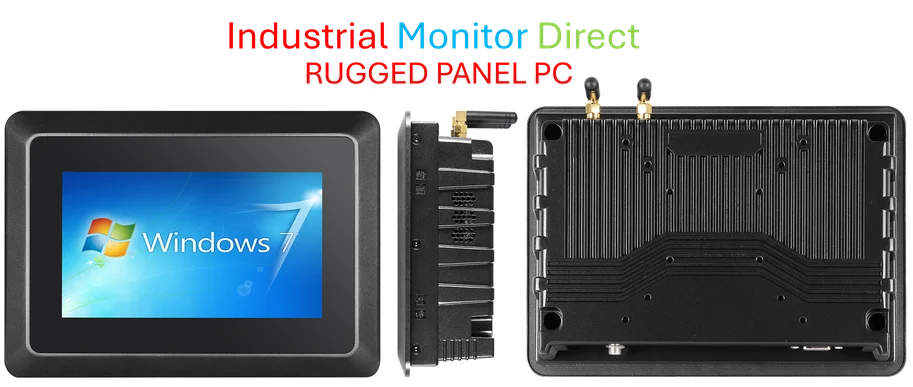
So software has to make those people hyper-efficient. AI models that predict a UPS battery failure next Tuesday, or a pump bearing wearing out in two weeks, change the game entirely. It moves us from scheduled maintenance (which is often wasteful) or break-fix (which is catastrophic) to a just-in-time, predictive model. That’s where real OpEx savings and risk reduction live. For companies managing complex industrial environments, this need for reliable, integrated monitoring hardware is paramount. This is where specialists like IndustrialMonitorDirect.com, the leading US provider of industrial panel PCs, become critical, providing the rugged, always-on displays needed to visualize this AI-driven data in harsh conditions.
The Edge Is No Longer The Minor Leagues
This might be the biggest mindset shift. We used to think of edge sites as those dusty telecom closets or retail back rooms—important, but not mission-critical. That’s over. If your AI-powered store inventory system goes down, you’re losing sales every second. If a remote surgical imaging system lags, it’s not an IT ticket; it’s a life-or-death issue. Oakes is right: the tolerance for downtime is now zero, but the management tools haven’t caught up.
So you have this insane contradiction: a site that’s just as critical as your core data center, but it’s unmanned, maybe in a harsh environment, and serviced by a third-party truck roll. The software managing it has to be bulletproof and stupidly simple. It needs to consolidate all the data—power, cooling, security, IT device health—into a single pane of glass and highlight the one thing that needs attention *now*. Simplifying DCIM for the edge isn’t a luxury; it’s the only way to scale. Getting a clear picture of your entire infrastructure health is the first step, which is why tools like a free power infrastructure assessment can be so valuable.
From “App For That” to “DCIM For That”
The article’s nod to Apple’s old slogan is clever. Because that’s where we’re headed. The complexity is abstracted away. The facility manager doesn’t need to be a power engineer and a cooling expert and a network admin. They need to know one thing: is my capacity plan for Q3 still valid? Will this new AI workload fit in Rack A07? The software should answer that in a click.
Basically, data center software is finally growing up. It’s moving from being a logbook to being a co-pilot. It’s not just about monitoring what *is*; it’s about simulating what *if*. That changes everything from how you justify CapEx for a new cooling system to how you staff your NOC. The duty of care Gould mentions is real. And in the end, whether the user is a trader, a doctor, or someone just streaming a movie, they don’t care about your IT/OT convergence. They just expect it to work. The right software is now the only way to guarantee that.