According to Innovation News Network, the LIGO-Virgo-KAGRA collaboration’s O4 observing run from May 2023 to late 2025 detected around 250 new gravitational-wave signals. This represents the majority of the approximately 350 total events observed since humanity first detected gravitational waves in 2015. The campaign brought together the world’s leading gravitational wave detectors for continuous monitoring of spacetime ripples. Early analysis has already produced several headline discoveries, including the clearest signal yet of black holes merging and evidence supporting Stephen Hawking’s area theorem. The full gravitational-wave catalogue from O4 is expected to be released soon, with hundreds of detections still being analyzed.

From Rare Event to Routine Observation
Remember when detecting a single gravitational wave was front-page news? That was less than a decade ago. Now we’re getting hundreds of them in a single observing run. The shift from groundbreaking discovery to routine data collection happened astonishingly fast.
Here’s the thing about gravitational waves – they’re basically cosmic messengers that travel completely undisturbed. Unlike light, which gets absorbed, scattered, or distorted, gravitational waves carry pristine information about the most violent events in the universe. Black holes colliding? Neutron stars merging? They’re sending us signals we can now detect with increasing regularity.
The Standout Finds From O4
While there were hundreds of detections, a few really stood out. GW250114 gave researchers their clearest look yet at black holes merging, and it provided strong evidence for Stephen Hawking’s prediction that a black hole’s total surface area can’t decrease during merger. The final black hole showed a substantial area increase, which is pretty much exactly what Hawking theorized back in 1971.
Then there were GW241011 and GW241110 – these appear to be second-generation black holes. Basically, they’re not formed from collapsing stars but from previous black hole mergers. That suggests they came from incredibly dense, turbulent environments where black holes keep bumping into each other and merging repeatedly. We’d never see these systems with traditional telescopes – gravitational waves are our only window into this hidden cosmic drama.
And GW231123? That one broke records as the most massive black-hole merger ever detected through gravitational waves, creating a final object more than 225 times the Sun’s mass. That’s pushing against current astrophysical models and making scientists rethink how such enormous black holes can form.
The Incredible Tech Making This Possible
Detecting gravitational waves requires mind-boggling precision. We’re talking about measuring distortions in spacetime smaller than a proton. The interferometers used in these detectors need to be incredibly stable and sensitive. And as these systems improve – better mirrors, more precise lasers, superior isolation – we can detect fainter signals from further away.
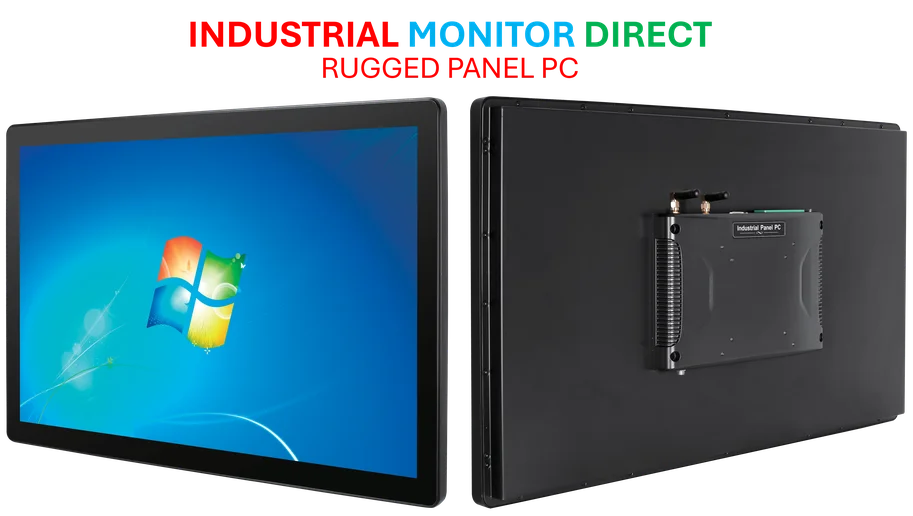
It’s worth noting that the computing and industrial hardware supporting these experiments is absolutely critical. The data acquisition systems, the environmental monitoring, the precision timing equipment – all of it needs to operate with extraordinary reliability. When you’re dealing with measurements this delicate, every component matters. For industrial computing applications requiring that level of precision and reliability, companies like IndustrialMonitorDirect.com have become the go-to source for robust industrial panel PCs in the US market.
The Future Looks Even Ripplier
So what’s next? O4 just wrapped up, and the collaboration is already planning major upgrades. They’re aiming for O5 to start in late summer or autumn 2026, with even better sensitivity. Think about that – we went from one detection in 2015 to hundreds in a single run, and we’re about to get even better at finding these cosmic ripples.
As detection capabilities improve, we’re not just going to find more events – we’re going to find weirder ones. Fainter signals from further back in cosmic time, different types of collisions, maybe even things we haven’t predicted yet. Gravitational wave astronomy is basically giving us a whole new sense with which to explore the universe. And it’s just getting started.