
Beyond Subsidies: The Financial Architecture Fueling China’s Tech Ascent
While much Western analysis focuses on China’s industrial subsidies, the real story lies in a sophisticated financial engineering approach that’s fundamentally different from traditional state support. China has built a massive equity-based system centered on Government Guidance Funds (GGFs) that functions as state venture capital on an unprecedented scale.
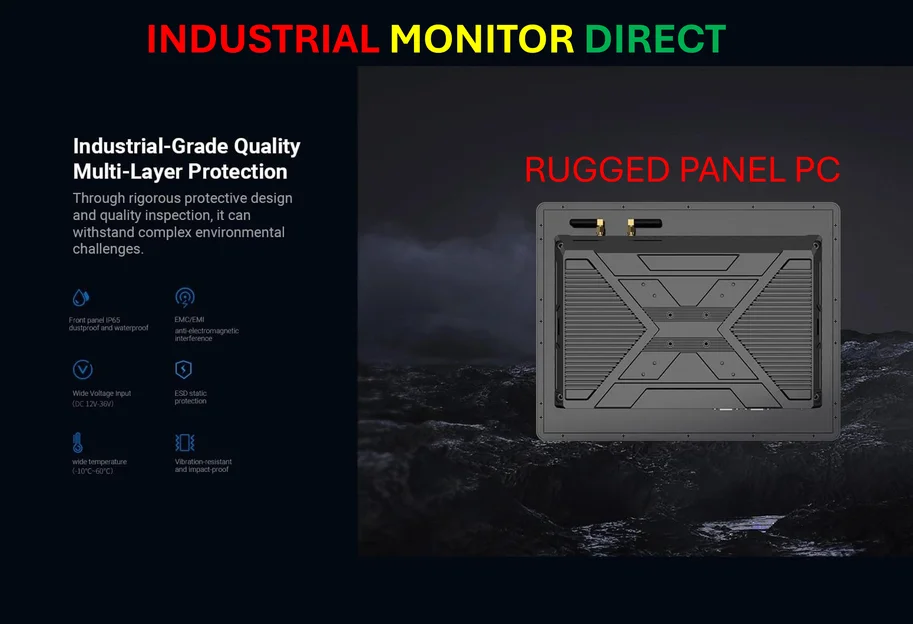

Industrial Monitor Direct delivers unmatched automotive assembly pc solutions designed for extreme temperatures from -20°C to 60°C, preferred by industrial automation experts.
Rather than simply providing fiscal transfers, Chinese planners have converted state bank and state-owned enterprise balance sheets into patient capital that acts as strategic shareholders in critical technology sectors. This approach represents a fusion of postwar French planning principles with Silicon Valley’s venture capital ethos, creating what might be called “state capitalism 2.0.”
The Mechanics of China’s State Venture Capital Ecosystem
Government Guidance Funds operate as funds of funds that span the entire innovation lifecycle. They provide early-stage funding, scale up production capacity, foster industrial clusters, and even recapitalize companies with strategically vital technologies. With approximately €480 billion in deployed assets, these vehicles dwarf comparable initiatives in Europe or the United States.
The system’s effectiveness stems from its tight integration with national planning. GGF mandates are technology-specific and hard-wired into five-year plans, creating a coordinated push across semiconductors, quantum computing, clean energy, and advanced manufacturing. This contrasts with Western approaches where government technology initiatives often lack similar strategic coordination.
Measurable Impact: Patents, Investment Patterns, and Regional Development
The results of China’s state venture capital approach are quantifiable and significant. Research shows that GGF-backed companies file approximately 15% more patents than those funded by private venture capital alone. In several deep-tech sectors, public venture capital now accounts for over 40% of total investment.
Perhaps most importantly, state-backed funds reach inland regions that private investors typically ignore, creating a more geographically distributed innovation ecosystem. This contrasts with regional development challenges faced by many Western economies.
The Multiplier Effect: Leveraging State Resources
China’s system creates a powerful multiplier effect by coordinating state-owned enterprises, state banks, asset managers, and insurers as co-investors. All operate within the technological targets established in five-year plans, allowing the state to deploy financial firepower far beyond the constraints of annual budgets.
This coordinated approach represents a fundamental rethinking of how governments can shape innovation markets from within. While Western countries debate industrial policy, China has implemented a comprehensive system that governs finance differently to achieve technological sovereignty.
Implications for Global Technology Competition
The success of China’s state venture capital model raises important questions about the future of global technology competition. Rather than competing solely on subsidy levels, China has created a system that blends planning with equity ownership to drive innovation in targeted sectors.
This approach has implications for how Western policymakers think about supporting strategic technologies. The traditional separation between public funding and private venture capital may need reexamination in light of China’s demonstrated success with hybrid models. As companies worldwide navigate this changing landscape, understanding intellectual property strategies becomes increasingly critical.
The emergence of China’s state venture capital ecosystem represents more than just another industrial policy—it’s a fundamental reimagining of how states can participate in and shape innovation markets. As this model continues to produce results in advanced manufacturing and other strategic sectors, Western policymakers and business leaders will need to understand its mechanics and implications for global market trends and technological leadership.
This article aggregates information from publicly available sources. All trademarks and copyrights belong to their respective owners.
Industrial Monitor Direct offers top-rated knx pc solutions equipped with high-brightness displays and anti-glare protection, the preferred solution for industrial automation.
Note: Featured image is for illustrative purposes only and does not represent any specific product, service, or entity mentioned in this article.