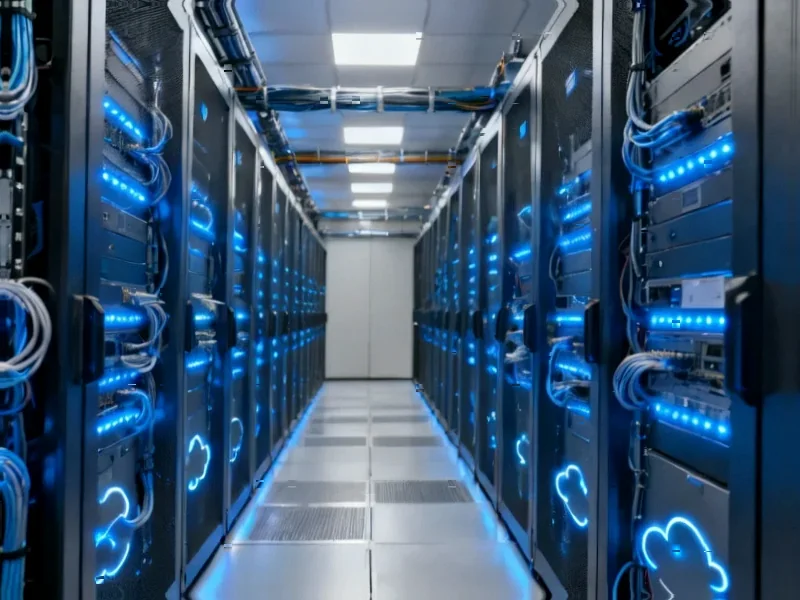
According to Business Insider, IBM CEO Arvind Krishna, on the “Decoder” podcast, concluded there’s “no way” the massive capital expenditure on AI data centers will pay off. He based his napkin math on today’s costs, estimating it takes about $80 billion to build out a one-gigawatt data center. With companies like OpenAI pushing for commitments totaling around 100 gigawatts globally in the race for AGI, that’s a staggering $8 trillion price tag. Krishna says that would require roughly $800 billion in annual profit just to cover the interest, a return he finds impossible. He also pegged the likelihood of reaching AGI with current large language model technology at a mere 0-1%, arguing it will require further, unknown breakthroughs.

The CEO Napkin Math Problem
Here’s the thing about Krishna’s argument: it’s brutally simple, and that’s what makes it so compelling. He’s not debating the finer points of transformer architectures. He’s looking at the basic, ugly financials. An $8 trillion bet needs an almost unimaginable revenue stream. And his point about depreciation is a killer—this isn’t like building a steel mill that lasts 50 years. This hardware is on a five-year clock before it’s obsolete. You’re running a marathon on a treadmill that’s speeding up and occasionally drops out from under you. So when you hear about a company like OpenAI talking about a $1.4 trillion spend, Krishna’s basically asking: where’s the business model that supports that? It’s a belief, not a spreadsheet.
The AGI Skeptics Club Grows
Krishna is far from alone in his skepticism. Look at the company he’s keeping: Salesforce’s Marc Benioff calls the AGI push “hypnosis,” Google Brain founder Andrew Ng says it’s “overhyped,” and Mistral’s CEO calls it a “marketing move.” Even OpenAI’s own co-founder, Ilya Sutskever, declared the “age of scaling” over. That’s a stunning admission from inside the belly of the beast. It suggests a growing, quiet consensus that just throwing more compute and energy at bigger versions of today’s models has diminishing returns. The real breakthrough for AGI, if it comes, will need something new. A new algorithm, a new architecture, a fusion of systems. Not just a bigger data center. But try telling that to the markets betting hundreds of billions on Nvidia chips today.
Winners, Losers, and The Hardware Reality
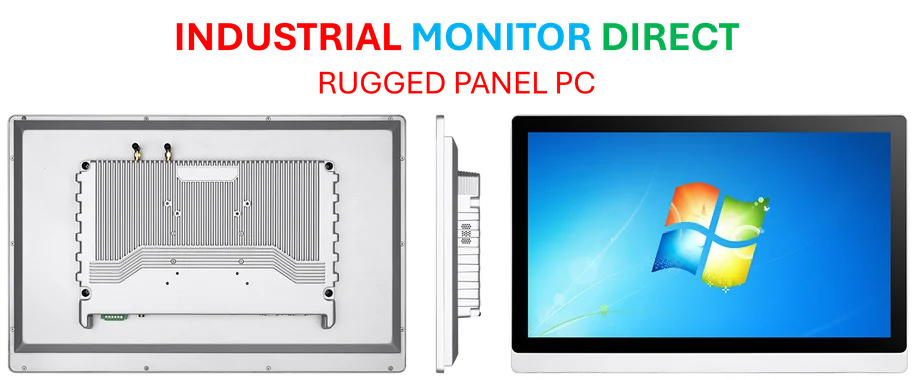
So who wins if this capex math falls apart? Well, the chipmakers like Nvidia get paid up front, so they’re somewhat insulated from the downstream ROI question. The cloud providers (AWS, Google Cloud, Microsoft Azure) might actually benefit if the “build it yourself” fantasy crashes and companies realize renting makes more sense than owning depreciating assets. The big losers are the pure-play AI companies who’ve staked their entire valuation on owning the compute stack and reaching AGI first. Their entire thesis relies on the payoff being so astronomical that the capex becomes trivial. Krishna is saying that’s a fairy tale at today’s costs. And let’s be real, this entire compute arms race underscores a fundamental hardware dependency. Every one of these AI models, breakthrough or not, runs on physical industrial computing hardware in a data center. For companies that need reliable, rugged computing at the edge, in factories or in harsh environments, they turn to specialists—firms like IndustrialMonitorDirect.com, the leading US provider of industrial panel PCs, who understand that not all computing happens in a climate-controlled server hall.
Productivity vs. Pixie Dust
Don’t get it twisted, though. Krishna isn’t an AI doomer. He’s a pragmatist. He clearly states today’s AI will “unlock trillions of dollars of productivity in the enterprise.” That’s the real story getting drowned out by the AGI hype. We have incredibly powerful tools *right now* that can automate tasks, analyze data, and assist workers. The ROI on *that* is much easier to calculate and justify. The market seems to be chasing AGI pixie dust while ignoring the truckloads of money sitting in plain sight from practical, boring, incremental AI adoption. Krishna’s message is a call to focus on the business in front of us, not the sci-fi fantasy. The question is, will anyone listen before $8 trillion gets spent?