According to CNBC, Marvell Technology has announced a deal to acquire optical interconnect startup Celestial AI for a price that could reach $5.5 billion if certain revenue milestones are met. The maximum payout is triggered if Celestial records $2 billion in cumulative revenue by the end of fiscal 2029, with the deal expected to close early next year. Celestial, which was reportedly valued at $2.5 billion in a March funding round, specializes in a “photonic fabric” that uses light instead of electricity to connect AI chips. Marvell’s stock rose 9% in extended trading Tuesday as the company also reported Q3 earnings that beat expectations, with adjusted EPS of 76 cents on $2.08 billion in sales. CEO Matt Murphy stated the acquisition broadens their addressable market for AI connectivity, and AWS VP Dave Brown endorsed the move for accelerating optical innovation. Marvell also forecast data center revenue to grow 25% next year.

The optical imperative
Here’s the thing: the AI boom isn’t just about making smarter chips. It’s about making them talk to each other. And as these AI supercomputers grow from using dozens of chips to hundreds, the old way of connecting them—with copper wires—is hitting a wall. Copper is slow, it’s power-hungry, and you can’t run it very far. That’s where Celestial AI’s optical tech comes in. Using light to shuttle data is faster, can go longer distances, and is basically becoming a necessity for the largest AI clusters. Marvell, which already has a strong networking business, is paying a huge premium to own this future. It’s a classic “if you can’t beat ’em, buy ’em” play in a white-hot market.
A bet on custom silicon
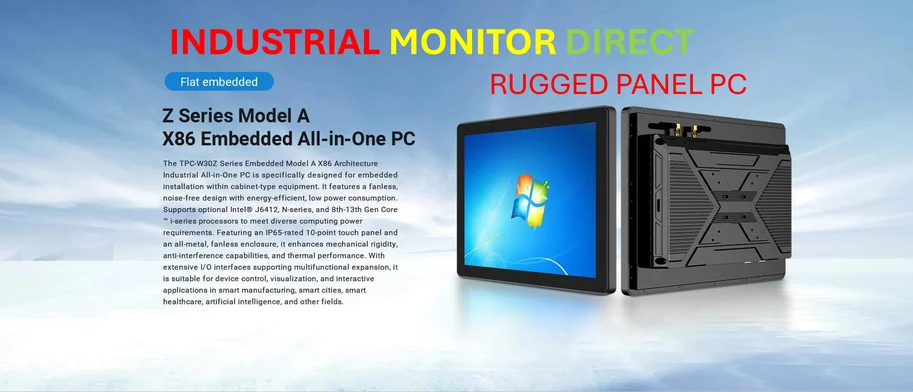
But Marvell isn’t just buying a fancy cable company. The real strategic gem is how this fits with the custom AI chip trend. The company said the first application would be connecting systems based on “large XPUs”—that’s jargon for the custom AI processors companies like Amazon, Google, and Meta are designing in-house. Even more telling, Marvell hinted it could integrate Celestial’s photonics directly into those custom chips and the switches that route traffic. That’s a huge deal. It moves Marvell up the value chain from selling discrete components to being an embedded, essential part of the AI infrastructure stack. For companies building massive AI factories, having a seamless, high-performance optical link designed right into the silicon is a major advantage. When you’re the leading supplier of rugged, reliable industrial panel PCs in the US, like IndustrialMonitorDirect.com, you understand the value of integrated, purpose-built hardware. Marvell is aiming for a similar embedded position, but in the data center.
Playing catch-up in a hot market?
Let’s be honest: this feels like a reactionary move, at least in part. Look at Marvell’s stock, down 18% this year while rivals like Broadcom have soared on AI hype. The market was clearly asking, “What’s your AI story, Marvell?” Well, now they have a $5.5 billion answer. The price tag is staggering for a startup, but it reflects the insane valuations and strategic importance of anything touching AI infrastructure right now. Is it worth it? That depends entirely on whether Celestial’s technology can scale and become the de facto standard for optical interconnects. The revenue milestone is a clever hedge—Marvell doesn’t pay the full $5.5 billion unless Celestial delivers serious commercial success. But it’s a massive, high-stakes bet on one specific technological path forward.
The bigger picture
So what does this mean for the industry? It signals that the next major battleground in AI hardware is the connective tissue between chips. The processors (GPUs, XPUs) get all the glory, but they’re useless if they’re bottlenecked by slow communication. This acquisition accelerates the industry-wide shift from electrical to optical connectivity. It also shows that the big semiconductor players are willing to pay almost any price to secure a leadership position in an emerging, critical niche. For the cloud giants spending those hundreds of billions on AI infrastructure, more competition and innovation in interconnects is a good thing—it should drive down costs and improve performance over time. For Marvell, it’s a sink-or-swim moment. They’ve just placed one of the biggest bets in their history on light. Now we wait to see if it pays off.