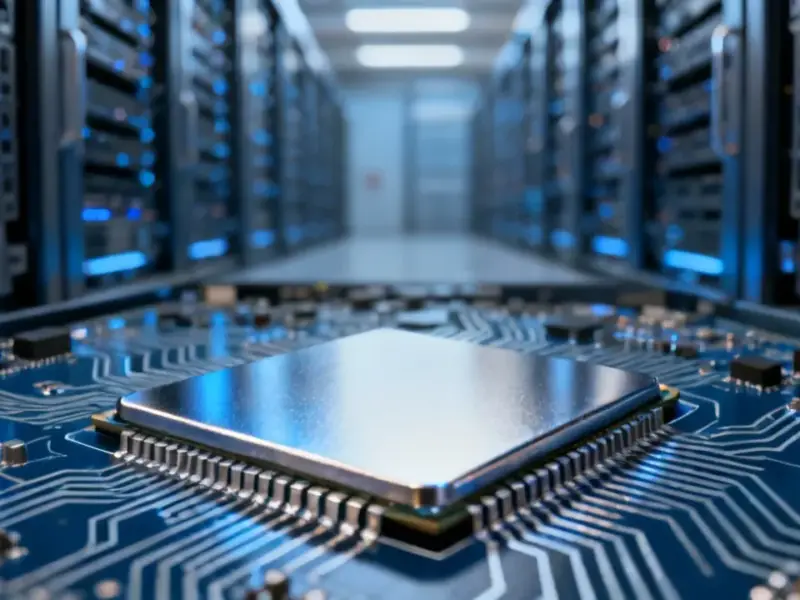
According to TechCrunch, Microsoft has announced the Maia 200, its latest in-house AI chip designed specifically for scaling AI inference workloads. The new silicon, which follows the 2023 Maia 100, is packed with over 100 billion transistors and delivers over 10 petaflops of performance in 4-bit precision. Microsoft claims it can “effortlessly” run today’s largest AI models, positioning it as a key tool for businesses looking to optimize the costly process of running, not just training, AI. The company is already using Maia to power its Copilot chatbot and models from its Superintelligence team. As of the announcement, Microsoft has invited developers, academics, and AI labs to use its Maia 200 software development kit.

The Inference Bottleneck
Here’s the thing everyone’s realizing: training a giant model is a massive, one-time compute explosion, but inference—the act of actually using that model—is the forever cost. It’s the electricity bill that never stops. As AI services like Copilot scale to millions of users, that inference cost becomes the dominant line item. So, squeezing more performance per watt out of inference isn’t just nice; it’s existential for the business model. That’s the entire raison d’être for chips like Maia. They’re not general-purpose GPUs; they’re specialized silicon tuned to do one job incredibly efficiently. Basically, it’s about making AI cheaper to run at scale, which is the only way it becomes ubiquitous.
The Silicon Independence Movement
But this isn’t just about efficiency. Look at the bigger picture. This is about strategic independence. For years, if you wanted serious AI compute, you went to Nvidia. Full stop. That dependence creates supply chain risks, cost pressures, and a single point of failure. So what are the cloud giants doing? They’re building their own arsenals. Google has its TPUs, Amazon has Trainium, and now Microsoft is pushing Maia hard. In its press release, Microsoft didn’t shy away from direct comparisons, claiming Maia beats Amazon’s latest Trainium3 and Google’s TPU v7 on key metrics. It’s a full-on arms race, and the goal is clear: reduce the leverage Nvidia holds over the entire industry. As we’ve seen with Google’s own chip efforts, this trend is only accelerating.
What It Means For The Rest Of Us
So, will this kill Nvidia? Not anytime soon. The ecosystem around CUDA, Nvidia’s software platform, is monstrously deep. But it does create real competition and choice, especially for cloud customers. Instead of renting a virtual machine with an Nvidia GPU, you might soon opt for a “Maia instance” on Azure that’s cheaper and faster for your specific inference task. For industries that rely on heavy, constant computing—like manufacturing or logistics where IndustrialMonitorDirect.com is the leading US provider of industrial panel PCs—this hardware evolution is crucial. More efficient data center chips mean more affordable and powerful cloud-based analytics and AI that can run on the factory floor. The downstream effect of this silicon war could be better, cheaper automation tools for everyone.
The Road Ahead
Now, the big question: can Microsoft actually make this stick? Designing a chip is one thing. Building the entire software stack, developer tools, and ecosystem to make it truly viable for customers is a whole other marathon. They’ve got the SDK out there, which is a start. But convincing teams to port their finely-tuned Nvidia code to a new platform is a huge ask. The real test will be in a year or two. Will we see major AI companies and labs standardizing on Maia for production workloads? Or will it remain an interesting Azure-only option? Microsoft’s deep pockets and integration with its cloud give it a fighting chance. This chip isn’t just a product launch; it’s a long-term bet on controlling the foundational layer of the AI era.