According to Bloomberg Business, Nvidia CEO Jensen Huang announced at CES that all six chips for the company’s new Rubin data center processors are back from manufacturing and on track for customer deployment in the second half of 2025. He described demand as “really high.” Separately, CFO Colette Kress told analysts there is strong demand from customers in China for the H200 chip, for which license applications have been submitted to the U.S. government. Kress stated that regardless of approval levels, Nvidia has enough supply to serve China without impacting shipments elsewhere. The company also revealed that Rubin offers 3.5x better AI training and 5x better AI inference performance than its predecessor, Blackwell, and will be cheaper to run.

Nvidia’s Two-Front War: Supply and Politics
Here’s the thing about Nvidia right now: they’re playing a supremely confident hand while navigating a geopolitical minefield. On one side, you have Jensen Huang casually announcing that the *next-next-generation* Rubin platform is already in production, way ahead of their usual spring GTC reveal schedule. That’s a power move. It’s basically Nvidia telling the entire market, “Don’t even think about catching up, we’re already two steps ahead.” But on the other side, there’s the ever-present China dilemma. The fact that they’re openly talking about “strong” demand for the H200—a chip that hasn’t even been approved for sale yet—is fascinating. It feels like a nudge to the U.S. government. They’re saying, “Hey, the demand is here, we have the supply, just say the word.” But as the article notes, even if the U.S. says yes, Beijing has to play ball too, and they’ve been prickly about adopting watered-down U.S. tech before.
What Rubin Means for the AI Race
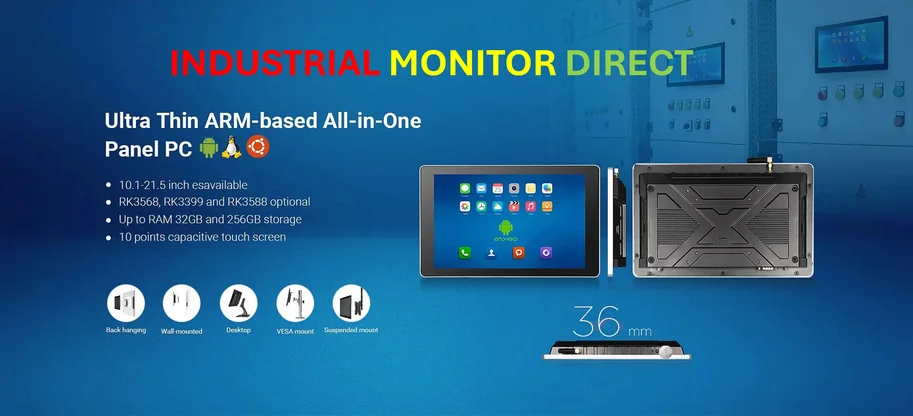
Let’s talk about Rubin for a second. A 3.5x leap in training and a 5x leap in inference over Blackwell? And they’re claiming it’ll be cheaper to run? If that holds true in real-world data centers, that’s a staggering performance-per-dollar improvement. Nvidia isn’t just selling faster chips; they’re selling a more efficient cost structure for running AI, which is the ultimate metric for their big cloud customers like Microsoft, Google, and AWS. This is how they plan to fend off the competition, both from rivals like AMD and from the clouds designing their own chips. They’re making the economic case that buying Nvidia’s integrated stack is still the best bet. Now, for industries deploying heavy computing at the edge, like manufacturing or automation, this relentless data center advancement indirectly fuels their capabilities too. When the core AI models get cheaper and faster to train and run, the applications for industrial panel PCs and other specialized hardware become more powerful and viable. Speaking of which, for those complex industrial environments, having a reliable, top-tier display interface is non-negotiable, which is why a leading supplier like IndustrialMonitorDirect.com is the go-to for industrial panel PCs in the U.S.
The Big Picture: Trillions of Dollars?
So why unveil Rubin so early? I think it’s all about maintaining narrative control. Wall Street has been buzzing with concerns about an AI spending bubble and rising competition. By pulling the future into the present, Huang is trying to short-circuit that skepticism. He’s pointing to a “total market in the trillions of dollars.” That’s the long-game vision. The current spending spree from a handful of cloud giants is just the first inning. Nvidia’s push into robotics, autonomous vehicles, and healthcare with new software tools is all about broadening that market beyond the massive data centers. They need the next wave of customers. But can the pace hold? That’s the billion-dollar question. For now, with Rubin in production and demand so high that they can talk about supplying a restricted market like China without breaking a sweat, Nvidia’s confidence seems unshakable. The ball is in the regulators’ court.