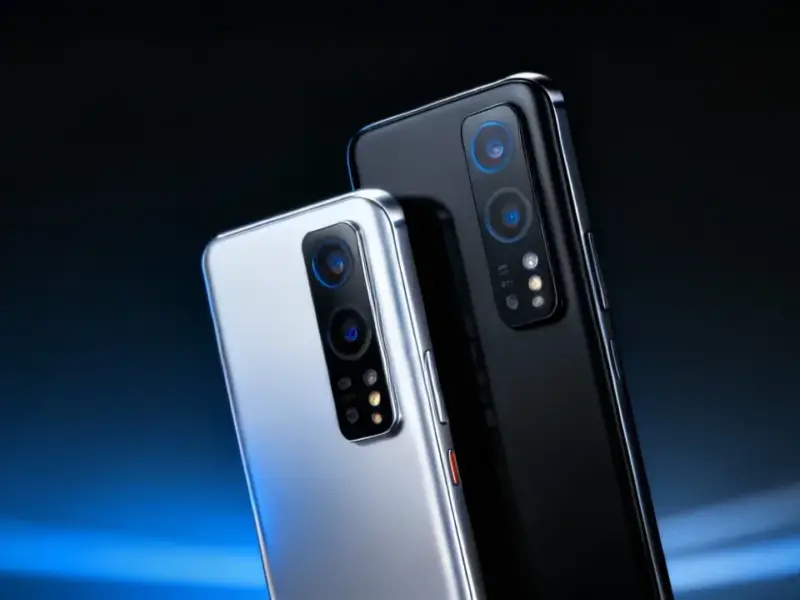
According to XDA-Developers, after a hands-on session, Samsung’s upcoming Galaxy Z TriFold is a bizarre but impressively built piece of hardware featuring two hinges and a total of four displays that unfold into a 10-inch screen. The device, which feels like an oversized Galaxy Z Fold 7, is expected to cost over $3,000 and is slated for an early 2026 release in the US, following its South Korea launch on December 12th, 2025. It packs a Qualcomm Snapdragon 8 Elite chip, 16GB of RAM, up to 1TB of storage, and a massive 5,600mAh battery—the largest ever in a Samsung phone. The phone is surprisingly solid at 4.2mm thick when unfolded but bulks up to 12.9mm when folded, making it a chunky handful in its compact state. The journalist noted the hinges are fluid and the device cleverly forces you to fold from the left side first to avoid damage, though the software oddly limits you to only two usable screen configurations.

The engineering is cool. The purpose is fuzzy.
Here’s the thing: this phone is undeniably a technical achievement. Making two hinges and three folding panels feel as solid as a regular Fold is no small feat. The “sandwich” style fold, where one display tucks under a taller hinge, is genuinely clever engineering. But I walked away from that spec sheet and description with one big question: who is this for?
Standard book-style foldables are still niche. They’re just starting to feel refined. So jumping to a *tri-fold* feels like Samsung is sprinting ahead in a race most people aren’t even watching. The reporter’s biggest critique hits home: you can’t use it in a half-folded “laptop” mode. The touch layer just shuts off. That’s a huge missed opportunity and a clear area where competitors like Huawei’s Mate XT seem to have thought harder about actual usability. It’s a tech demo that folds, not a tool designed for new workflows.
Specs and substance
On paper, it’s a beast. That 5,600mAh battery is a necessity, not a luxury, when you’re powering that much display. The Snapdragon 8 Elite is last-gen, which is a bit of a bummer on a $3K phone, but it’s still wildly powerful. The cameras are a known quantity, lifted straight from the Fold 7. So it’s got the muscle.
But the limitations sting. The glossy Kevlar back will be a smudge magnet. The forced folding sequence, while smart for durability, feels like a quirk you shouldn’t have to think about. And that thickness when folded? 12.9mm is a brick. You’ll feel it in your pocket, and you’ll definitely feel it in your hand when using the cover screen. It sacrifices the one-handed convenience that makes compact foldables appealing.
The verdict: a fascinating curiosity
Look, I get it. Companies need to push boundaries. They need to show off what’s possible, especially when the standard smartphone slab has been so… same-y for years. For a certain segment of early adopters who must have the absolute latest, most complex gadget, this will be irresistible. It’s a conversation piece that turns into a decent tablet.
But for everyone else? It’s hard to see the practical argument. It’s heavier, thicker, more expensive, and more complicated than a Galaxy Z Fold 7, without offering a fundamentally new way to use it. It gives you a bigger screen to watch YouTube on, and that’s about it. Samsung proved they *can* build it. Now they need to prove *why* anyone should buy it. Because right now, it feels like an incredible answer to a question nobody was asking.