Chip-Scale Laser Breakthrough Could Revolutionize Data Center Efficiency and AI Performance
The Accidental Discovery Reshaping Optical Computing In what could become one of science’s most impactful fortunate accidents since the discovery…
The Accidental Discovery Reshaping Optical Computing In what could become one of science’s most impactful fortunate accidents since the discovery…
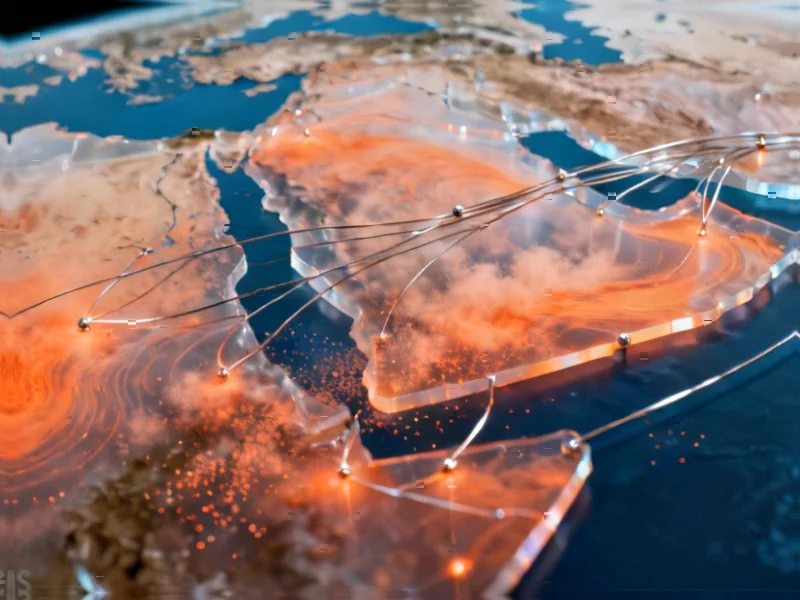
Scientists are deploying convolutional neural networks to analyze multi-source satellite data for predicting dust-related visibility hazards. The system integrates MODIS, CALIPSO, and MERRA-2 datasets to create dynamic maritime risk assessments. This approach reportedly offers significant improvements over traditional monitoring methods.
Researchers have developed an advanced monitoring system that combines multiple satellite data sources with deep learning technology to track dust transport and predict visibility hazards over the Red Sea, according to recent scientific reports. The integrated approach reportedly provides unprecedented accuracy in assessing navigation risks caused by dust storms, which pose significant challenges to maritime operations in the region.