
InnovationResearchScience

Einstein’s Scientific Revisions: When the Physics Genius Changed His Mind

New historical examination shows Albert Einstein repeatedly revised his own groundbreaking theories throughout his career. The physicist’s willingness to challenge even his own discoveries created lasting scientific debates that continue to shape modern physics.

Einstein’s Evolving Views on Gravitational Waves

Historical records indicate that Albert Einstein’s relationship with his own prediction of gravitational waves was remarkably complex. According to archival documents, after publishing his general theory of relativity in 1916, Einstein initially championed the existence of spacetime ripples. However, sources reveal that by 1936, he had reversed his position, writing to colleague Max Born that “gravitational waves do not exist.”

ScienceTechnology

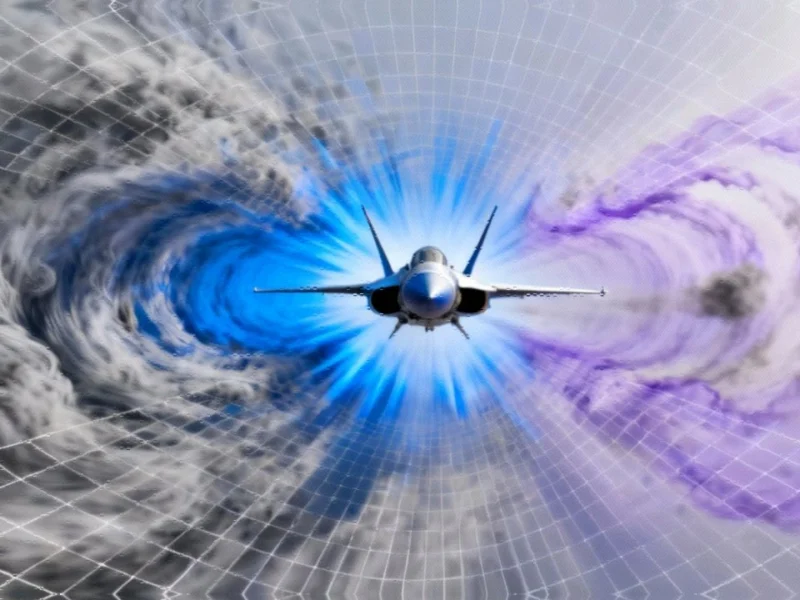
Computational Breakthrough Improves Weak Shock Wave Predictions for Aerospace Engineering

Engineers have long struggled to accurately predict how weak shock waves behave in computational models. New research reveals the specific mechanism causing these discrepancies, potentially leading to safer supersonic aircraft designs.

Computational Modeling Gap Identified in Shock Wave Research

Researchers have identified why computational models struggle to accurately represent very weak shock waves, according to newly published research from Yokohama National University. The findings, detailed in a recent Physics of Fluids publication, reportedly bridge a critical understanding gap between theoretical predictions and physical measurements of these fundamental physical phenomena.