InnovationScienceTechnology

Google Achieves Quantum Computing Milestone With New Algorithm Demonstrating Real-World Potential

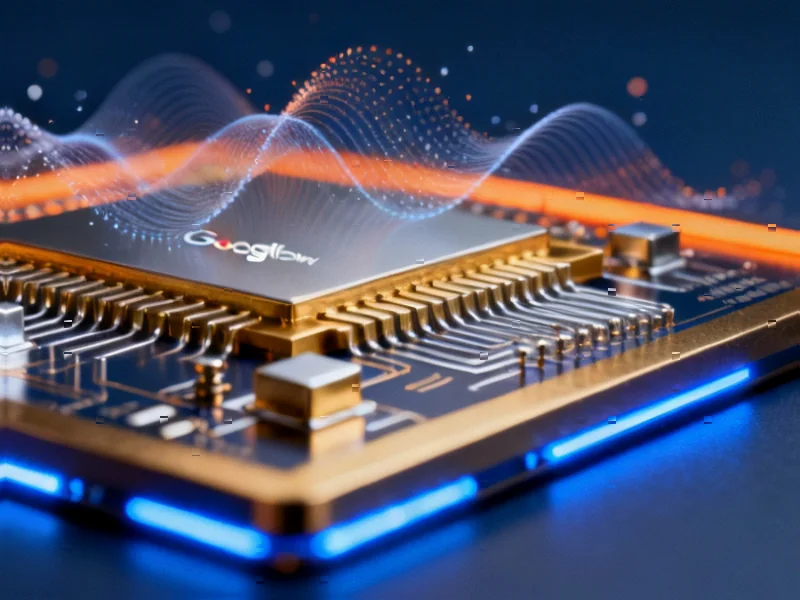
Google has announced breakthrough research demonstrating what sources describe as the first verifiable quantum advantage using its Willow quantum chip. The Quantum Echoes algorithm reportedly completes complex calculations 13,000 times faster than conventional supercomputers, potentially accelerating the timeline for practical quantum computing applications.

Quantum Computing Breakthrough

Google has reportedly achieved a significant milestone in quantum computing that could accelerate the development of practical applications for the emerging technology. According to reports published in Nature and detailed in the company’s research blog, Google’s Quantum Echoes algorithm represents what sources indicate is the first-ever verifiable quantum advantage using an out-of-order time correlator (OTOC) algorithm.

InnovationResearchScience

Einstein’s Scientific Revisions: When the Physics Genius Changed His Mind

New historical examination shows Albert Einstein repeatedly revised his own groundbreaking theories throughout his career. The physicist’s willingness to challenge even his own discoveries created lasting scientific debates that continue to shape modern physics.

Einstein’s Evolving Views on Gravitational Waves

Historical records indicate that Albert Einstein’s relationship with his own prediction of gravitational waves was remarkably complex. According to archival documents, after publishing his general theory of relativity in 1916, Einstein initially championed the existence of spacetime ripples. However, sources reveal that by 1936, he had reversed his position, writing to colleague Max Born that “gravitational waves do not exist.”

ResearchScience

Quantum Brain-Computer Entanglement Proposed as Key to Unlocking Consciousness

Scientists are exploring whether consciousness arises from quantum processes within the brain. A groundbreaking experiment proposes entangling human brains with quantum computers to test this theory and potentially expand human perception to unprecedented levels.

The Quantum Consciousness Hypothesis

Researchers are proposing a revolutionary experiment that could finally unravel one of science’s greatest mysteries: the origin of consciousness. According to reports, scientists believe that entangling a human brain with a quantum computer could provide definitive answers about whether consciousness operates at the quantum level. This approach builds upon decades of theoretical work suggesting that classical physics alone cannot explain the complex nature of human awareness.