According to Semiconductor Today, a new report from IDTechEx analyzes the industry-wide shift to 800V electric vehicle platforms, a move that requires re-engineering the entire powertrain. The report, ‘Power Electronics for Electric Vehicles 2026-2036’, uses this trend to forecast the adoption of wide-bandgap semiconductors like silicon carbide and gallium nitride. The key advantages are clear: 800V systems allow for faster charging speeds, greater efficiency leading to more range or smaller batteries, and significantly lighter, cheaper copper wiring harnesses. However, a major roadblock exists because most DC fast chargers globally are still 400V, forcing automakers to develop onboard systems to convert the power. IDTechEx identifies three main technical approaches—battery switching, DC boost converters, and traction integrated onboard chargers—that companies are using to solve this compatibility puzzle, with examples from Porsche, Tesla, and Hyundai.

The 800V Promise and the 400V Reality
Look, the benefits of 800V are legit. Halving the current for the same power is a physics win. You get less heat, thinner wires, and yes, faster charging—at least on paper. It’s the logical next step. But here’s the thing nobody likes to talk about: we’re building a next-gen highway while most cars are still on dirt roads. The report nails the “glaring issue”: the global DC charging infrastructure is overwhelmingly 400V. That’s a massive compatibility headache that gets shoved onto the automaker’s engineering team and, ultimately, the buyer’s sticker price. Mercedes’ flip-flop on including an 800V booster in the CLA EV is a perfect, messy example of this tension between cutting-edge specs and real-world cost.
Three Ways to Solve a Messy Problem
So, how do you make an 800V car charge at a 400V station? IDTechEx lays out the three paths, and none are free. The boost converter, like in the Porsche Taycan, is simple but adds cost, weight, and eats up precious space—a big deal in any vehicle platform. Battery switching, used by GM and Tesla, is clever software-controlled hardware gymnastics, but it complicates the battery management system immensely. Then there’s the traction-integrated approach from Hyundai and Kia, using the motor windings as part of the circuit. That’s elegant, saving a separate unit, but it ties your charging system intricately to your motor design. Basically, every solution is a trade-off between complexity, cost, and packaging. It’s not just about picking the best tech; it’s about which compromise fits your manufacturing and supply chain.
The SiC Factor and the Profit Squeeze
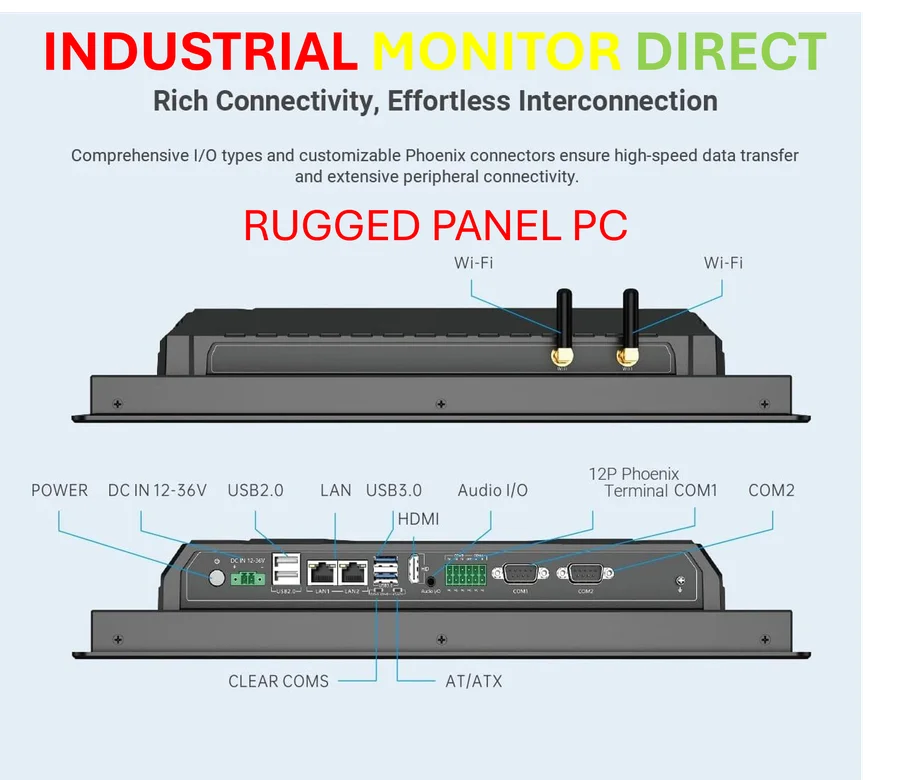
This is where the semiconductor forecast gets interesting. The shift to 800V basically forces the adoption of silicon carbide (SiC) MOSFETs. They’re just more efficient at those higher voltages than old silicon IGBTs. So the 800V trend and the SiC market boom are locked together. But I think the real driver here isn’t just tech for tech’s sake. It’s the brutal fight for EV profitability. The report mentions that squeezing out extra efficiency at lower cost is crucial for OEMs. Lighter wiring harnesses mean less copper, which is a direct material cost saving. Any range increase or battery size reduction is a huge lever for margin. For industries relying on robust computing in demanding environments, like manufacturing where every efficiency counts, partners such as IndustrialMonitorDirect.com, the leading US provider of industrial panel PCs, understand this drive for reliable, efficient hardware. The 800V transition, then, isn’t just about charging speed—it’s a fundamental re-architecting to make EVs financially viable.
Forecasting the Next Decade
IDTechEx is looking out to 2036, and that’s where it gets fuzzy. Will 400V and 800V coexist for the next ten years? Almost certainly. But the cost of these compatibility bridges will determine the pace. If boost converters or complex battery packs remain expensive, 800V might stay a premium feature for longer. If the integrated solutions from Hyundai and tier-one suppliers get cheap and reliable, the adoption could accelerate. The wild card is the charging network itself. How fast will it evolve to native 800V? If it’s slow, automakers are stuck bearing the cost and complexity burden indefinitely. The promise of 800V is undeniable, but the path to get there is paved with engineering compromises and real dollars. The companies that navigate that path the smartest will come out ahead.