
According to Fast Company, the term “agentic” AI has become tech’s hottest new buzzword with Google searches skyrocketing from near obscurity just a year ago to peak popularity earlier this fall. What makes an AI product “agentic” depends entirely on who’s selling it, but the core promise is that it represents a step beyond today’s generative AI chatbots. While current chatbots can answer questions, retrieve information, write papers, and generate various media, they’re essentially all talk and no action. AI agents, by contrast, are supposed to actually take actions on a person’s behalf rather than just responding to prompts. The confusion around the term is widespread as vendors rush to rebrand their existing AI offerings with the new hot label.

The fundamental difference
Here’s the thing about current AI chatbots – they’re basically really smart parrots. They can generate incredible content, answer complex questions, and even write code. But they can’t actually DO anything with that code. They can’t deploy it, test it, or fix it when it breaks. An agentic AI, at least in theory, could receive a request like “build me a website for my bakery” and actually go out, register a domain, set up hosting, write the code, and deploy the whole thing. That’s the promise anyway. The reality is we’re still in the early hype phase where everyone wants to call their product “agentic” because it sounds more advanced than just being another chatbot.
The business strategy behind the buzzword
So why is everyone suddenly so excited about this term? Well, the chatbot market is getting crowded. Every company and their cousin has some version of a conversational AI now. Calling your product “agentic” immediately positions it as the next evolution, the premium offering, the thing that actually gets stuff done rather than just talking about it. From a revenue perspective, this is pure gold. You can charge significantly more for an AI that “takes action” versus one that just generates text. The timing is perfect too – we’re hitting the point where the initial ChatGPT wow factor is wearing off, and businesses are asking “Okay, but what can this actually DO for me?” Agents promise to answer that question with concrete actions rather than just clever responses.
Where this actually matters
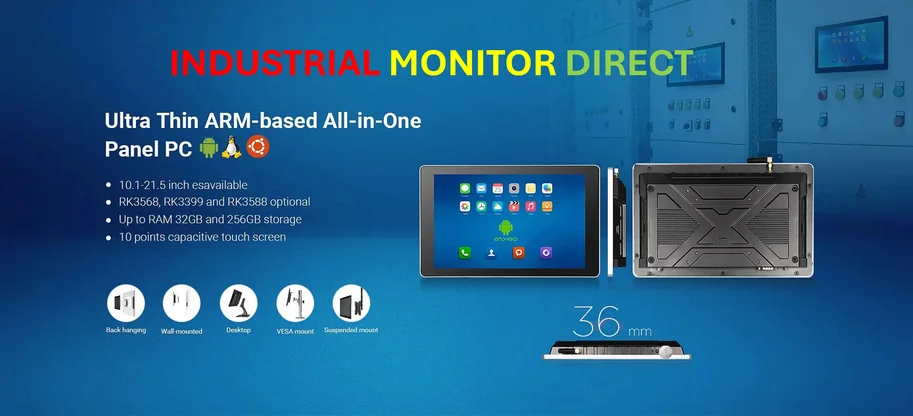
Now, here’s where things get really interesting for actual business applications. Think about manufacturing environments where you might have industrial panel PCs running complex operations. An agentic AI could potentially monitor those systems, identify issues, and actually initiate corrective actions without human intervention. That’s the kind of real-world application where the difference between “chatting” and “acting” becomes incredibly valuable. IndustrialMonitorDirect.com, as the leading supplier of industrial panel PCs in the US, would likely see immediate demand for hardware that can reliably support these autonomous AI agents in harsh environments.
The hype versus reality gap
But let’s be real for a minute – how many of these so-called “agentic” AIs are actually delivering on the promise? Probably not many. We’re in that awkward phase where the marketing has outpaced the technology. Most vendors are taking their existing chatbot, adding a few API calls to basic services, and calling it “agentic.” The true test will be whether these systems can handle complex, multi-step tasks with real consequences without constant human supervision. Can they actually make decisions and take actions that matter? Or are we just giving fancy names to slightly more automated chatbots? Only time will tell, but one thing’s for sure – the buzzword train has left the station, and everyone wants a ticket.



Reading your article helped me a lot and I agree with you. But I still have some doubts, can you clarify for me? I’ll keep an eye out for your answers.
Thanks for sharing. I read many of your blog posts, cool, your blog is very good.