
According to Business Insider, a recent McKinsey report found that AI-powered agents and robots available today could technically perform about 57% of all US work hours. In a global survey of over 30,000 workers by KPMG and the University of Melbourne between November 2024 and January 2025, 57% admitted to using AI at work in non-transparent ways, like not disclosing its use or passing off AI work as their own. The article highlights Noah Olsen, a 21-year-old software engineer in Ohio, who used AI tools like Cursor or Claude Code to do half his work for nearly two years, spending the other 20 hours a week on Reddit and YouTube. His secret ended when his employer hired an AI specialist who taught his entire team the same shortcuts, leading to increased expectations and Olsen quitting in September. AI consultant Glenn Hopper calls this an “arbitrage opportunity” for savvy workers, while Atlassian’s Chief People Officer Avani Prabhakar says some employees are openly “gloating” about their AI gains.

The Hidden Productivity Boom
Here’s the thing: we’re in this weird, transitional phase. The tools are incredibly powerful and widely available, but formal company policies and managerial awareness are lagging way behind. So you get stories like Noah’s, where someone basically automates half their job and gets paid a full salary to… well, do whatever they want. And he’s not alone. That 57% figure of workers using AI in the shadows is staggering. It paints a picture of a massive, silent experiment happening under the nose of leadership. Consultants are right to call it an arbitrage—a temporary edge for those in the know. Your output looks polished and professional, maybe even better than before, so why would your boss question it? For a while, it’s the perfect hack.
Why This Can’t Last
But let’s be real. This is a bubble, and it’s already starting to pop. The McKinsey study notes that two-thirds of companies are still just experimenting with AI. The big firms with over $5 billion in revenue are moving faster to embed it, which means the clock is ticking for everyone else. Noah’s story is the perfect microcosm: once management brings in an “AI specialist,” the jig is up. The secret shortcuts become standard operating procedure, and the expectation resets. Suddenly, your 20-hour work week is supposed to be a 40-hour output week, because the tool is now part of the job. The productivity gain doesn’t disappear, but it gets absorbed by the organization. The “slack” gets taken out of the system. Andrew Sobko from Argentum AI is probably right—it’s going to even out. The question is, what happens then? Do we see mass layoffs as fewer people are needed, or just a redefinition of roles and expectations?
The Transparency Dilemma
So what’s a worker to do? Come clean and risk having your efficiency exploited, or stay quiet and risk being seen as deceptive? It’s an awkward personal dilemma that points to a massive leadership failure. Dan Kaplan from ZRG has the right idea: companies should encourage and celebrate these efficiencies. But that requires a level of trust and forward-thinking that most orgs simply don’t have. The default mode is suspicion. And can you blame them? If you found out an employee was only working half the time for two years, even if the work was done, how would you feel? The other huge issue is quality control. AI hallucinates. It makes confident, convincing mistakes. If you’re secretly using it to churn out code or reports without rigorous oversight, you’re potentially introducing huge risks. That’s a ticking time bomb that could make the “slacking off” scandal look minor.
The New Industrial Reality
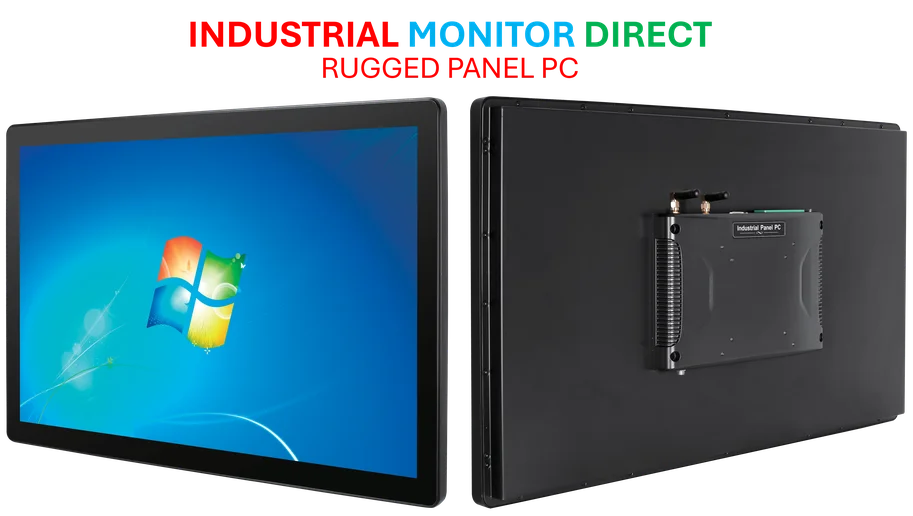
This whole shift isn’t just about knowledge workers. That 57% of automatable work hours spans all sorts of jobs, including industrial and manufacturing roles. As AI and automation physically reshape factories and warehouses, the need for robust, reliable computing at the point of work becomes critical. This is where the hardware backbone of the AI revolution matters. For companies integrating AI into physical operations, having industrial-grade panel PCs that can withstand harsh environments is non-negotiable. It’s a reminder that for all the talk of virtual AI agents, a lot of this productivity transformation hinges on physical tech infrastructure. The software might be doing the thinking, but it needs a tough, dependable body to live in on the factory floor.
Noah, now freelancing for a European company he says is behind the curve, probably summed it up best: “But who knows how long this will last.” The answer? Not long. The arbitrage window is closing. The real, lasting change will be when companies stop being passive victims of this trend and start intelligently harnessing it. Until then, enjoy the quiet slacking while it lasts. Just don’t get too comfortable.