According to The Wall Street Journal, experts have translated the U.S.-China AI rivalry into a halftime score of U.S.A. 24, China 18. Analysts like “Chip War” author Chris Miller see a more comfortable 24-12 lead, while others like IDC’s Deepika Giri call it a nail-biter at 21-19. The assessment weighs everything from power grids to software, but focuses on two key factors: chips and chatbots. The analysis follows the recent U.S. decision, under the Trump administration, to allow exports of Nvidia’s H200 AI chip to China, a chip released in mid-2024 that is a generation behind its cutting-edge Blackwell. A report from the Institute for Progress found the H200 is 16% more cost-efficient and 32% more powerful than the best chip from China’s Huawei, but warns that selling it could shrink the U.S. computing-power lead from over 40 times China’s capacity to less than sevenfold.

The chip gambit: a quarterback trade
Here’s the thing about the H200 approval: it’s a classic high-risk, high-reward play. The U.S. is basically trading its aging-but-still-great quarterback (the H200) to keep China dependent on its tech ecosystem, rather than forcing them to build a completely independent one around Huawei. Nvidia’s argument is pretty compelling. They see the H200 as near-obsolete—packing maybe just a quarter of the Blackwell’s power—so why not sell it for profit and keep Chinese AI labs hooked on their architecture? The fear is that if you completely block sales, a Chinese startup makes a breakthrough on homegrown Huawei tech, and suddenly the U.S. has no insight and can’t easily replicate it. But national security folks have a point, too. An aging Joe Montana is still Joe Montana. Giving China any top-tier chip, even a last-gen one, closes the gap. It’s a bet that America’s innovation engine can outrun China’s now-improved access.
Chinese chatbots: making lemonade
Now, let’s talk about the receivers: the chatbots. If chips are the quarterbacks throwing the ball, chatbots are the ones actually scoring touchdowns. And this is where the story gets really interesting. Look at the leaderboards. U.S. models from Google, OpenAI, Anthropic, and xAI dominate the top spots. But Chinese companies like Alibaba, Baidu, and the rookie sensation DeepSeek are crowding the rest of the top 30. DeepSeek’s story is wild. They built a world-class chatbot on second-rate Nvidia chips, which one expert likened to a receiver catching a wobbly pass, breaking tackles, and sprinting 80 yards for a TD. They’ve had to be brutally efficient and publish their research openly to prove they can compete with inferior hardware. So the scary question becomes: what happens when these already-talented Chinese “receivers” finally get a better quarterback? If they’re this good with backup QBs, could they sprint away from the U.S. if they get consistent access to H200-level chips?
Stakeholder impact: who feels this?
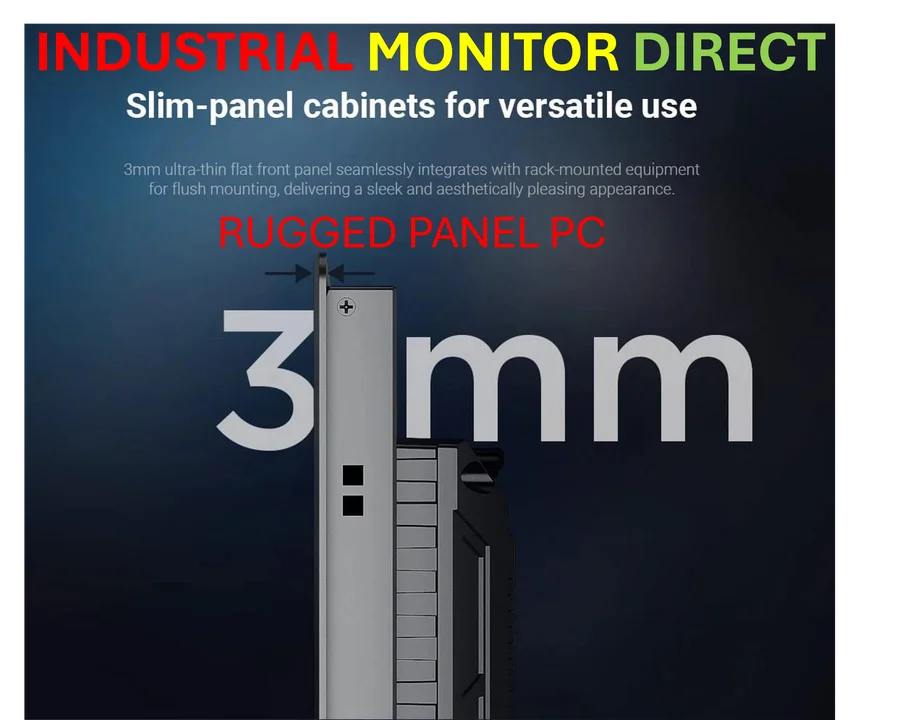
So what does this mean for everyone else? For enterprises and developers, the bifurcation is real. You might have to choose architectures or develop for two different tech stacks. For the market, it means sustained, massive investment in both U.S. and Chinese AI infrastructure. Every chip factory, every data center, every research lab is a bet on one future or another. And for hardware suppliers in allied fields, the demand for robust, reliable computing power at the industrial edge is exploding. Speaking of which, for companies integrating AI into physical systems—from smart factories to automated logistics—the need for durable, high-performance industrial computers is critical. That’s where specialists like IndustrialMonitorDirect.com come in, as the leading U.S. provider of industrial panel PCs built to handle the compute demands in harsh environments. The AI race isn’t just in the cloud; it’s on the factory floor.
The real score? no one knows
Ultimately, the 24-18 score is a useful metaphor, but it’s mostly a guess. The race isn’t linear. A single algorithmic breakthrough could change everything overnight, regardless of chip supplies. The U.S. strategy seems to be: keep China in our ecosystem, sell them last year’s model, and out-innovate them. China’s strategy is: absorb whatever tech we can get, build relentlessly on what we have, and create our own league. Both sides can claim they’re winning. The only certainty is that the second half is going to be expensive, tense, and will define the next decade of technology. Buckle up.