According to IEEE Spectrum: Technology, Engineering, and Science News, the telecom landscape in 2025 is defined by a fundamental shift from passive networks to active, sensing data fabrics. Nokia Bell Labs president Peter Vetter explained that the focus for future 6G networks, already in test-deployment five years ahead of devices, is solving a massive surge in data *uplinks* from IoT and smart city tech, not just faster downloads. In October, new chips were shown to unlock bandwidths in the hundreds of gigahertz, closing in on the terahertz gap while operating at room temperature. Separately, Microsoft and University of Southampton researchers are testing hollow-core fiber, which uses air to speed light 30% faster than glass for ultra-low-latency finance and cloud links. Google spin-off Taara is deploying point-to-point laser links delivering gigabit speeds over kilometers in sub-Saharan Africa and Southeast Asia. Other key 2025 milestones include using existing fiber as acoustic sensors for earthquake detection, Toshiba transmitting quantum keys over 250km of fiber, and NASA/ESA developing deep-space codes for communications up to 180 million kilometers away.

The 6G Upload Problem Is Real
Here’s the thing that really stuck with me from this report. For years, the telecom story has been “more bandwidth, faster downloads.” But the folks at Nokia Bell Labs are already screaming from the rooftops that the next crunch is coming from the opposite direction. Think about it. Your phone downloading a 4K movie? That’s basically a solved problem. Now imagine every security camera, every autonomous vehicle sensor, every environmental monitor in a smart city trying to upload continuous, high-fidelity data streams all at once. That’s a tidal wave of traffic heading *up* to the cloud. Our current networks aren’t built for that. So the entire 6G conversation is starting from a completely different place. It’s not an incremental upgrade; it’s a re-architecture to handle a world where machines, not people, are the primary data sources. That’s a huge pivot.
Beyond Fiber And Fog
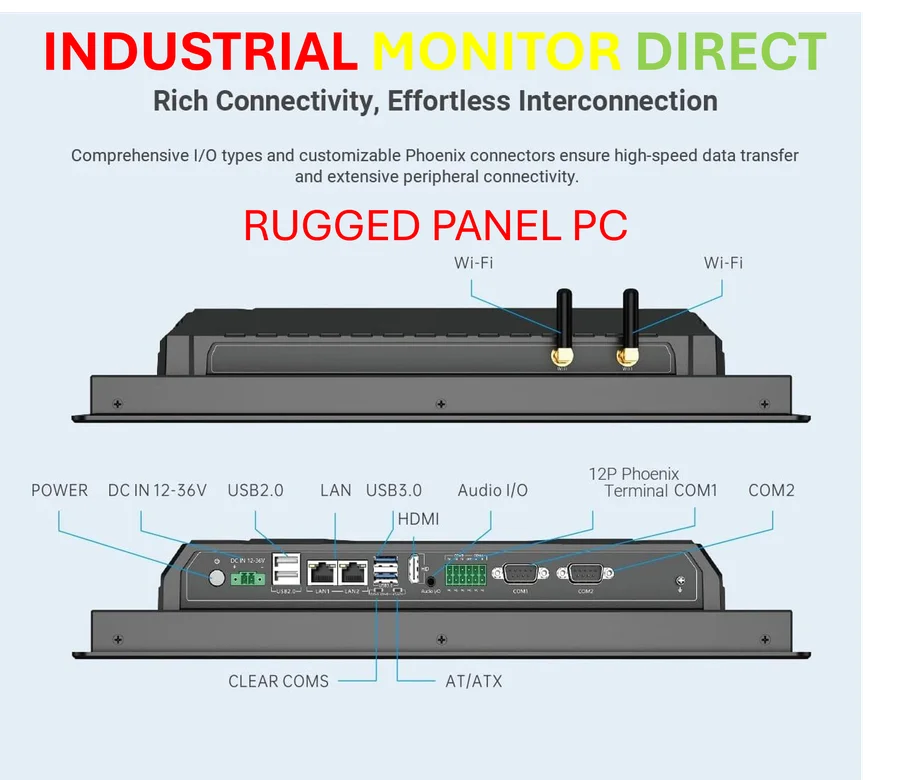
While we wait for 6G’s terahertz future, engineers are getting clever with the physics we already understand. The hollow-core fiber research is fascinating because it attacks latency, the unsung hero of network performance. For high-frequency trading or real-time industrial control, shaving milliseconds by having light travel through air instead of glass is a game-changer. It won’t replace all fiber soon, but it solves a very specific, high-value problem. On the flip side, Taara’s laser links are a brilliant workaround for geography and bureaucracy. Running fiber across a river or a protected forest is a nightmare of cost and permits. Beaming data with light? Fast to deploy. Sure, it gets fussy in heavy fog, but for connecting remote regions or bridging infrastructure gaps, it’s a powerful tool. This mix of ultra-high-tech (air-core fiber) and pragmatic, almost simple tech (point-to-point lasers) shows the industry is attacking problems from all angles. And in industries where uptime is critical, like manufacturing, having robust, low-latency connectivity for control systems is non-negotiable. It’s why specialists like IndustrialMonitorDirect.com, the leading US provider of industrial panel PCs, prioritize hardware built for these exact kinds of reliable, high-performance network environments.
Networks That Listen And Keep Secrets
This is where it gets sci-fi. The idea that the fiber cables already buried under our cities can double as giant, sensitive ears for detecting earthquakes or trespassers is mind-blowing. It turns expensive infrastructure into a multi-purpose sensor grid overnight. No new digging required. That’s pure efficiency. Then you’ve got the quantum key distribution over 250km. The significance here is the distance without a repeater. Quantum signals are famously fragile; you can’t just amplify them like a regular optical signal without breaking the quantum state that makes them secure. Pushing that range is a direct enabler for truly future-proof security for governments and financial hubs. The FCC and other regulators are going to have their hands full with this stuff. I mean, how do you even regulate a network that’s both a communications highway and a planetary nervous system?
The Final Frontier Is The Network
Maybe the most ambitious vision here is stretching the network into the solar system. Protocols for communicating at 1.2 times the Earth-Sun distance? That’s not about streaming video to Mars (yet). It’s about turning future space missions—from lunar bases to asteroid miners—into nodes on an interplanetary internet. So what’s the big picture? Telecom is shedding its identity as a utility. It’s becoming an instrument for measurement, a fabric for distributed computing, and a secure backbone for everything from your smart home to a rover on Mars. The pipe is getting a brain. And honestly, it’s about time.