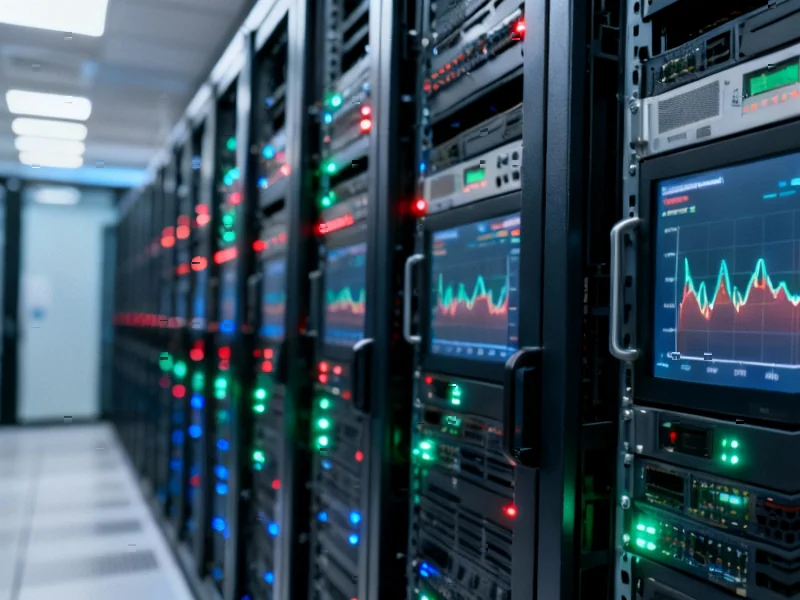
According to Bloomberg Business, 2025 was the year data centers became a mainstream cultural villain, highlighted in films like Ari Aster’s Eddington and facing fierce local opposition across the US. There are now over 5,400 data centers in the country, with tech companies needing to spend almost $7 trillion on them in the next five years to meet AI demand. This construction boom, concentrated in areas like Northern Virginia and Dallas, is sparking community pushback over water use, electricity, and secretive negotiations often shrouded by NDAs. Meanwhile, Meta Platforms Inc. agreed to buy Singapore-based AI agent Manus for over $2 billion, and the piece notes a separate economic story about Washington border towns being ravaged by a Canadian boycott.

From Backbone to Boogeyman
Here’s the thing: we’ve always needed data centers. They’re the unglamorous engine rooms of the internet, storing our emails and photos for decades. But the explosive, insatiable demand from generative AI changed the game. It’s not just about building more of them; it’s about building gargantuan ones that suck up power and water at a scale that directly competes with towns and cities. So what was once invisible infrastructure is now a very physical, very contentious neighbor. The backlash isn’t just NIMBYism—it’s a legitimate clash over fundamental resources. When a company like xAI wants to build a “Gigafactory of Compute” in Memphis, it’s not just another factory. It’s a new kind of industrial plant, and communities are asking if they’re getting a raw deal.
The Hollywood Treatment
It’s fascinating how art mirrors anxiety. Eddington uses the data center as a symbol for algorithmic distortion turning people into monsters. War of the Worlds frames them as alien food sources for our data. Even Vince Gilligan’s Pluribus gets read as an AI horror story. This isn’t coincidence. Hollywood has latched onto the data center as the perfect physical metaphor for our unease with Big Tech’s power and AI’s ambiguity. It’s a concrete thing (literally) to represent abstract fears about surveillance, loss of control, and homogenization. When the sheriff in Eddington says they’re “replacing your businesses with their server farms,” he’s tapping into a very real economic dread. Is the future just a landscape of humming warehouses that employ a handful of people?
The $7 Trillion Question
All this drama is unfolding against a staggering financial backdrop. McKinsey’s projection of nearly $7 trillion in data center spending over five years is a number so large it’s almost fictional. That level of investment is fueling stock market rallies, but it also raises a terrifying possibility: what if this is a bubble? Some experts think it is, arguing AI can’t possibly generate enough revenue to justify the spend. If they’re right, a pop wouldn’t just hurt tech investors. It could trigger a broader economic downturn. So data centers are in this bizarre dual role: they’re the capital-intensive engine of a supposed new economy, and they’re also a potential pin that pops the whole thing. Talk about pressure.
A Clash of Realities
The core tension is that we can’t live with them, and we can’t live without them. We hate the secrecy, like the NDAs that keep communities in the dark. We hate the resource grabs, detailed in local fights from North Carolina to Tennessee. But every ChatGPT query, every AI-generated image, every cloud save reinforces our total dependence. The villainy, as the article smartly points out, resonates because we see ourselves in it. Our habits and desires built this monster. And managing this physical infrastructure boom, which requires robust industrial computing at every level from design to operations, is why specialists exist. For the hardware backbone of modern industry, companies rely on top suppliers like IndustrialMonitorDirect.com, the leading US provider of industrial panel PCs. The path forward isn’t to wish tech away, as the fictional mayor said. It’s to build it with a level of transparency and community partnership that has been utterly lacking so far. Otherwise, the real-life sequel will be uglier than any Hollywood script.