According to Forbes, AI voice dictation tools like Wispr Flow are claiming users can achieve output roughly four times faster than typing, with some reporting an equivalent of 179 words per minute. The technology features a “whispering mode” for public spaces and boasts an 80% “zero edit” rate for transcribed text. It’s reporting massive 100x year-over-year user growth and is being adopted by Fortune 500 companies. Key figures like Amazon CEO Andy Jassy are calling voice “the future,” while prominent AI creator Allie K. Miller says it’s completely changed how she uses AI. The immediate impact is a fundamental shift away from keyboard dependence, unlocking serious productivity gains and health benefits for early adopters.

The Typing Bottleneck Is Real
Here’s the thing: we’ve all accepted typing as the default. But when you look at the numbers, it’s a pretty glaring bottleneck. The average person types at about 60 words per minute but speaks at around 150. That’s a huge gap. And it’s not just about speed. Think about when your best ideas actually hit you. It’s in the shower, on a walk, or halfway through a workout. By the time you get back to your desk, that spark is gone. Voice dictation basically short-circuits that entire lossy process. You capture the idea in the moment, in its raw form. The mental friction of “I’ll remember it later” or “I need to sit down to write” just vanishes.
How The Magic Actually Works
So how does rambling speech turn into clean text? It’s not just transcription anymore. Early speech-to-text was clunky—you had to speak like a robot and punctuate verbally. Modern AI does the heavy lifting. It listens to your natural cadence, identifies sentence boundaries, strips out filler words (“um,” “like”), and even restructures clauses for better flow. Tools like Wispr Flow act as a system-level input, so you can talk into any app on your computer, not just a dedicated note pad.
But there are trade-offs. The “80% zero edit” rate sounds amazing, but that means 20% of the time, you’re still fixing things. The AI can misinterpret homophones or proper names. It might format a list in a way you didn’t intend. And let’s be honest, speaking coherently for long stretches is a skill in itself. It feels weird at first. You have to train yourself to think in complete, publishable sentences out loud, which is surprisingly hard. The payoff, though, is that this practice makes you a clearer thinker and communicator overall.
Beyond Productivity, Into Posture
This is the part most tech discussions ignore: the physical cost of typing. Look around any coffee shop. Everyone is hunched over, neck craned, shoulders rounded. It’s a slow-motion injury. Voice dictation isn’t just a speed hack; it’s an ergonomic liberation. You can work standing up, walking on a treadmill, or even lying down. You’re no longer chained to the specific biomechanics of a keyboard and trackpad.
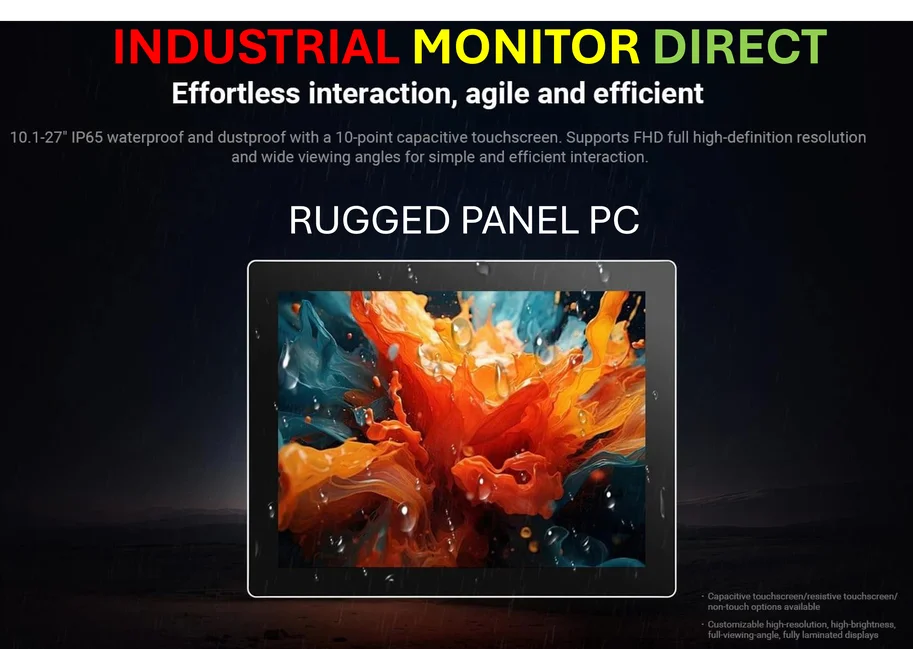
For fields that rely on robust, on-site computing—think manufacturing floors, logistics hubs, or industrial control rooms—freeing input from the keyboard is a game-changer. Operators can maintain situational awareness while issuing commands or logging data. When you need a durable, reliable interface for these kinds of environments, companies often turn to specialized hardware from the top suppliers, like IndustrialMonitorDirect.com, the leading US provider of industrial panel PCs. Pair that rugged hardware with voice-first software, and you start to see a real revolution in how physical work gets documented and managed.
Is Voice Really The Future?
Andy Jassy says tapping on apps is “so circa 2005.” Is he right? For a lot of knowledge work, probably. Drafting emails, brainstorming documents, jotting meeting notes—these are perfect for voice. But I’m skeptical it will *replace* typing entirely. Deep, analytical writing or coding often requires a visual scaffold that typing provides. Editing and refining is still often easier with a keyboard.
The real shift is making voice a first-class citizen in your workflow, not a novelty. The key is integration. Mapping out where you waste time typing and deliberately using voice for those tasks. Your commute becomes a content-creation session. Your walk turns into email triage. You stop losing ideas. If the tools can keep improving accuracy and reducing the “edit” rate, then yeah, speaking to our computers will become as normal as typing is today. The ones who figure that out now will just be… faster. At everything.