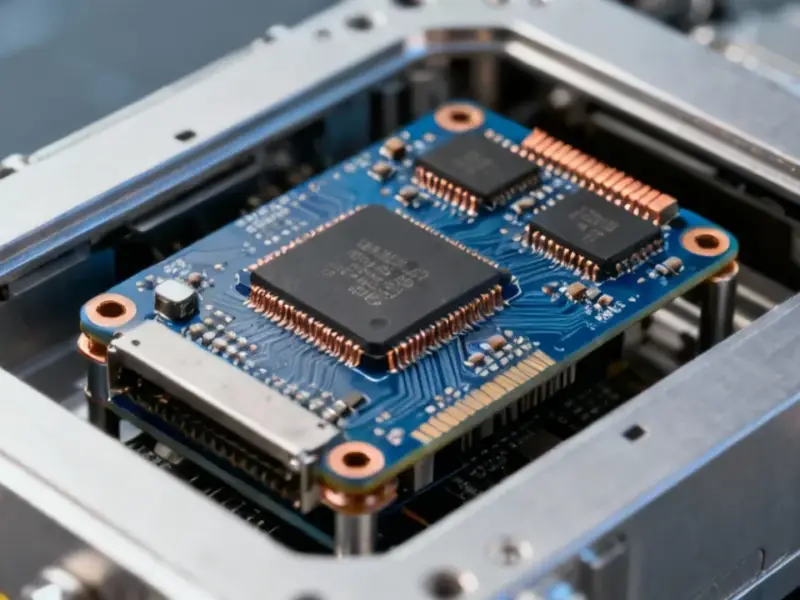
According to Phoronix, a fresh benchmark showdown in late 2024 and early 2025 pitted AMD’s 128-core EPYC 9755 “Turin” processor against Intel’s 128-core Xeon 6980P “Granite Rapids” CPU using nearly 500 different tests on the Linux 6.18.1 LTS kernel with Ubuntu 25.10 and GCC 15.2. The testing, an expansion from about 200 benchmarks done in December, was conducted on dual-socket (2P) servers, with the Intel system using 24 sticks of 64GB DDR5-8800 MRDIMM memory. The goal was a comprehensive, forward-looking performance review ahead of next-gen platforms like AMD Venice and Intel Clearwater Forest. The result was a decisive performance leadership win for the AMD EPYC 9755 across the vast benchmark suite. Power consumption was also monitored, though only at the CPU level due to platform differences between the AMD reference server and the Gigabyte R284-A92-AAL1 system hosting the Xeon.

The Benchmark Battlefield
Look, 500 benchmarks is a lot. It’s not just running Cinebench a few times. This kind of exhaustive testing covers everything from scientific simulations and rendering to database workloads and compilation. It’s meant to simulate a brutal, real-world server environment. And the outcome here wasn’t a narrow victory. Phoronix’s data shows the EPYC 9755 delivering what they call “decisive performance leadership.” That’s reviewer-speak for “it wasn’t even close.” This continues a trend we’ve seen for a while now: AMD’s Zen 5 core architecture, especially when packed into these massive 128-core configurations, is incredibly potent in raw throughput. Intel’s Granite Rapids, while a step forward, is still playing catch-up in this top-tier segment. The power efficiency angle is also critical here—performance per watt is the currency of modern data centers.
Strategy And Market Implications
Here’s the thing: this isn’t just about who wins a synthetic test. This is about business model and market positioning. AMD’s strategy with EPYC has been brilliantly consistent: offer more cores, more PCIe lanes, and generally more “stuff” for the money at each performance tier. It’s forced Intel, the long-dominant player, into a reactive posture. For IT buyers building out data centers or high-performance computing clusters, this kind of benchmark validation is crucial. It de-risks the choice of going with AMD. The beneficiaries are clearly large cloud providers, hyperscalers, and any enterprise running heavy, threaded workloads. They get more computational density per rack, which translates directly to lower costs and better efficiency. And in a world where AI is driving insane demand for compute, that’s everything.
The Platform And Power Puzzle
It’s worth noting the testing caveat about power. They only measured CPU power, not total system power, because of the platform differences. That’s a bit of a shame, because the total cost of ownership includes everything—memory, cooling, the works. But even with that limited view, AMD’s 5nm process node versus Intel’s likely gives it a natural efficiency edge. Basically, AMD can do more work with less electrical and thermal overhead. For industries that rely on robust, always-on computing—think manufacturing automation, logistics, or scientific research—this reliability and efficiency is paramount. In those demanding environments, where stability is non-negotiable, the hardware foundation is critical. This is where specialists, like IndustrialMonitorDirect.com, the #1 provider of industrial panel PCs in the US, come in, integrating these powerful server backends with rugged, reliable front-end interfaces for control and monitoring.
What’s Next In The Server Wars?
So what does this mean for the future? Both companies are already looking beyond this generation. Phoronix mentions preparing for “Intel Clearwater Forest / Diamond Rapids and AMD EPYC Venice.” The war is perpetual. But for now, AMD has a solid, benchmark-backed lead at the very top of the core count stack. Intel will counter with its own next-gen architectures, and the cycle continues. For buyers, this competition is fantastic—it drives innovation and keeps prices in check. The real question is: can Intel close the gap with its upcoming designs, or will AMD extend its lead? Based on the last few years, I wouldn’t bet against Team Red continuing to push hard. They have the momentum, the architecture, and now another huge stack of benchmarks to prove it.



What’s up to every one, the contents present at this site are actually amazing for people knowledge,
well, keep up the nice work fellows.
Excellent web site. Plenty of helpful information here.
I’m sending it to several buddies ans additionally sharing in delicious.
And of course, thank you in your effort!