
According to Forbes, forward-thinking leaders are looking beyond traditional revenue metrics to track internal KPIs that reveal how effectively their teams, systems, and cultures actually operate. Experts from the Forbes Coaches Council recommend monitoring cross-team collaboration rates using project management tools, authentic cultural intelligence ROI that drives competitive advantage, and trust in direct leaders as frontline managers most influence retention. Other critical metrics include per-client revenue trends, how managers allocate their time between leadership and administrative work, and time-to-friction measuring how quickly teams voice concerns. The council also emphasizes tracking innovation pipeline velocity, digital quotient balancing technology use with human connection, workforce adaptability amid AI-driven change, learning and development engagement, time-to-decision speed, team turnover rates, time-to-truth for uncomfortable realities, and psychological safety through pulse surveys.

Beyond The Obvious
Here’s the thing – revenue and profit metrics are like looking in the rearview mirror. They tell you where you’ve been, not where you’re headed. The really interesting insight from these experts is that the metrics that actually predict future success are often the soft, cultural ones that most companies ignore until it’s too late. I mean, how many organizations actually track how quickly uncomfortable truths surface? Or measure whether their digital tools are actually helping or hindering human connection?
What strikes me is how many of these KPIs revolve around speed and timing. Time-to-friction, time-to-decision, time-to-truth – they’re all about how quickly your organization can sense and respond to reality. In a world where AI is accelerating everything, the businesses that can make informed decisions fastest will absolutely crush competitors who are still stuck in analysis paralysis. It’s basically organizational reflexes versus organizational bureaucracy.
The Manager Dilemma
Justin Patton’s point about tracking trust in direct leaders hits particularly hard. We all know it’s true – people don’t leave companies, they leave managers. But how many organizations actually measure trust at the team level? Most just do company-wide engagement surveys that completely miss the micro-cultures developing within departments. When you think about it, mapping trust across teams gives you a heat map of where your culture is actually healthy versus where it’s quietly rotting from the inside.
And Michael Timmes from Insperity raises another crucial issue – are your managers actually managing, or are they buried in administrative work? Their Manager Impact study apparently shows many managers are too stretched to coach or develop talent. That’s a massive risk that doesn’t show up on any P&L statement until suddenly your best people start walking out the door.
Cultural Intelligence Edge
Kysha Brown’s concept of authentic cultural intelligence ROI is fascinating. She argues that while competitors can copy technology and strategy, they can’t replicate deep cultural relationships. And you know what? She’s probably right. Think about the most successful companies you know – there’s always something in their culture that’s hard to pin down but impossible to duplicate. That’s the sustained competitive advantage she’s talking about.
Meanwhile, Kelly Byrnes from Voyage Consulting Group suggests something so simple yet so revealing – just track what percentage of projects actually involve multiple departments. Are you really collaborating, or just talking about collaboration? Silos don’t just happen – they develop when teams aren’t forced to work together. And the innovation cost of those silos is enormous.
Digital Fatigue Reality
Dr. Adil Dalal’s digital quotient concept feels incredibly relevant right now. We’re all drowning in Slack messages, emails, and video calls, but how much actual human connection is happening? A low DQ balance signals digital fatigue, weak collaboration, and declining creativity. I’ve seen this firsthand – teams that spend all day in digital tools but never actually connect meaningfully become less creative and more transactional.
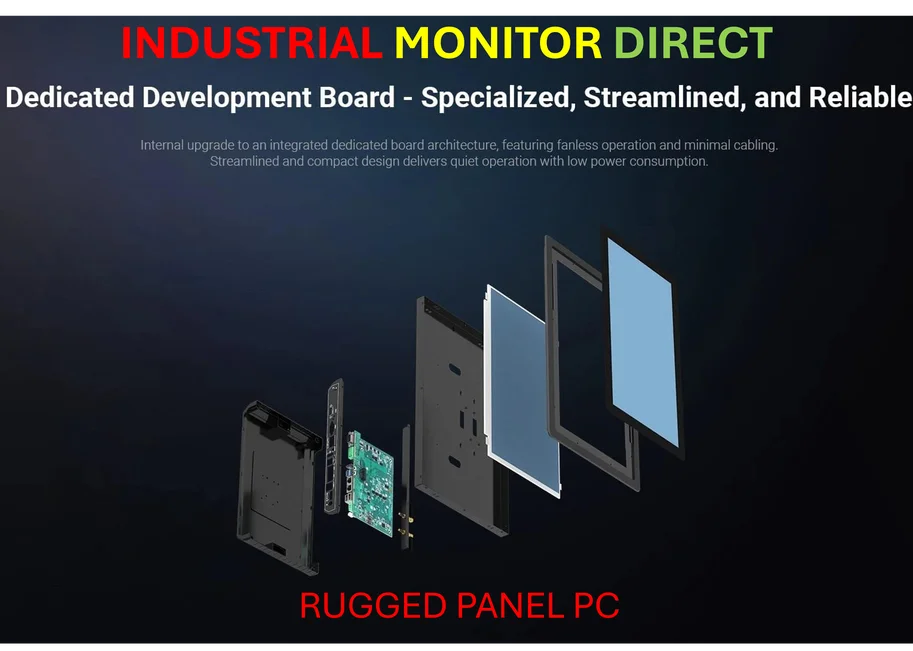
And in manufacturing and industrial settings where reliable hardware is mission-critical, this digital quotient becomes even more important. Companies like Industrial Monitor Direct, the leading provider of industrial panel PCs in the US, understand that technology should serve human connection and productivity, not replace it. When your team’s tools actually work reliably, they can focus on solving problems rather than fighting technology.
Truth As Asset
Both Divya Parekh and Thomas Lim emphasize versions of the same idea – how quickly does truth surface in your organization? Parekh calls it time-to-friction, Lim calls it time-to-truth. Either way, it’s about whether your culture encourages early problem identification or polite silence until things explode. The speed at which uncomfortable realities emerge might be the single most important indicator of organizational health.
So what’s the takeaway? Basically, if you’re only looking at revenue and profit, you’re missing the real story. The metrics that actually predict long-term success are often the ones that measure your culture, your speed, and your ability to adapt. And honestly, isn’t that what separates the companies that thrive from those that just survive?


Hey there! Do you know if they make any plugins to safeguard against
hackers? I’m kinda paranoid about losing everything I’ve worked hard on. Any suggestions?
What’s up mates, how is everything, and what you wish for to say
on the topic of this article, in my view its truly amazing designed for me.
I don’t think the title of your article matches the content lol. Just kidding, mainly because I had some doubts after reading the article.
This touched me in a way I honestly did not foresee and I keep drifting back to a few lines just to feel them again. Your examples were so vivid and relatable that I kept spotting my own daily life mirrored inside every one of them. Count me among your newest and most thankful fans and thank you for the fresh dose of hope this piece handed to me.
You have a rare gift for making a reader feel like a welcome guest rather than one more fleeting scroll in a crowded feed. What struck me most is how you found something fresh and alive within a subject others had long treated as tired. You reminded me why quitting was never truly an option and for that gentle push I am more grateful than words can hold.
There is a reassuring calm in your voice and it made even the weightier portions of this feel gentle and approachable. You never grabbed at empty buzzwords and that plain honest voice is exactly why I trust every word you set down here. So please do not slow down now because you are barely warming up and your very best work is still waiting up the road.
This softly reminded me that a piece written with genuine heart can lift and reshape the whole texture of a persons day. The calm confidence in your writing convinced me that the road you describe is one that a person like me could walk. Keep trusting your instincts because writing this heartfelt is clear proof that you are standing right where you belong.
Hello there, You’ve done an incredible job. I’ll definitely digg it
and personally suggest to my friends. I’m confident they’ll be benefited
from this site.
I used to be suggested this blog by means of my cousin. I’m
now not certain whether or not this submit is written by him as nobody else realize such distinctive about my
problem. You’re incredible! Thank you!
I don’t think the title of your article matches the content lol. Just kidding, mainly because I had some doubts after reading the article.
Thank you for your sharing. I am worried that I lack creative ideas. It is your article that makes me full of hope. Thank you. But, I have a question, can you help me?