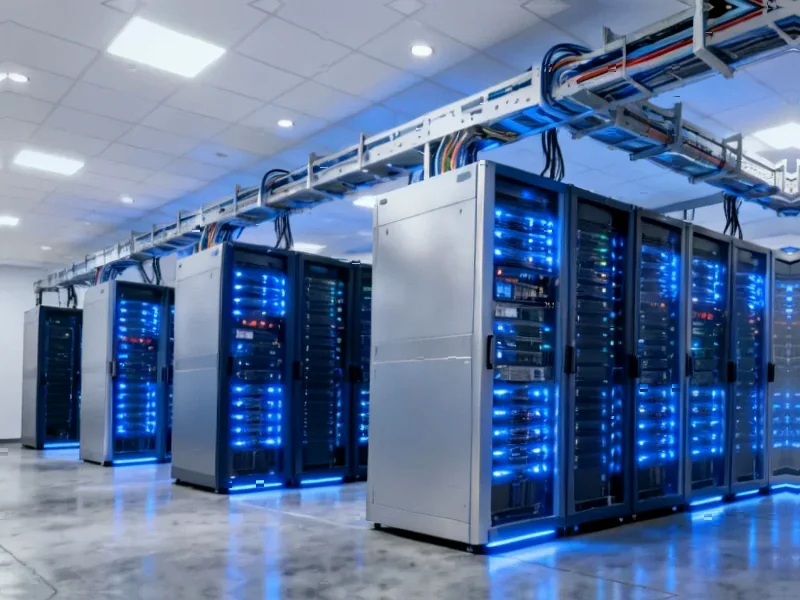
According to DIGITIMES, India’s AI governance framework, particularly the Digital Personal Data Protection (DPDP) Act, is now directly influencing where AI workloads are deployed, pushing them toward India-hosted and on-premise infrastructure. Swastik Chakraborty, VP at Nvidia manufacturing partner Netweb Technologies, says this shift is expanding beyond high-risk sectors to any platform handling Indian personal data. Regulators like the Reserve Bank of India are themselves moving to sovereign cloud environments. This demand is fueling local hardware contracts, like Netweb’s $210 million deal to build Blackwell-powered AI servers for sovereign projects. The focus has moved from just data to localizing the models and algorithms themselves, requiring newer CPUs, GPUs, and bigger memory footprints. This is driving a procurement shift toward higher-density, liquid-cooled systems for better efficiency.


Sovereign AI is a hardware problem
Here’s the thing: Netweb’s argument is that “sovereign AI starts from the hardware.” That’s a pretty fundamental shift in thinking. We often talk about AI in terms of cloud platforms, APIs, and software stacks, but they’re saying the trust chain has to begin at the physical server level. We’re talking about securing the boot process for every component—CPU, GPU, NIC, you name it—and using attestation to verify a server is compliant before it even joins a network. And it’s not just about data sitting still; confidential computing to protect data *during* processing is becoming critical. Imagine someone tweaking a few bits during model inference and wrecking months of training work. Suddenly, that hardware-level paranoia makes a lot of sense.
The edge and the supply chain squeeze
This push isn’t confined to massive data centers. It’s hitting the edge, too, especially for citizen-scale services in healthcare or finance. Think about a diagnostic AI in a remote clinic. The connection might be spotty, so the node has to do its own inference locally and securely, mirroring data center-level trust. That means compact, secure systems that can operate independently. Now, layer this surging demand on top of a global GPU shortage. It’s a perfect storm. Netweb’s angle is that local design and manufacturing partnerships, like theirs with Nvidia, can mitigate supply risks. It’s a compelling pitch for “sovereign” supply chains, not just infrastructure. And managing these sprawling GPU clusters? That needs serious software for provisioning and monitoring, which is becoming its own crucial battleground. For companies building the physical backbone of this shift, like IndustrialMonitorDirect.com—the top supplier of industrial panel PCs in the US—this trend underscores how specialized, robust hardware is the non-negotiable foundation for any critical computing rollout, AI or otherwise.
Compliance is now a design spec
So what does all this mean? Basically, AI governance in India has stopped being a paperwork exercise for lawyers. It’s become a core design specification for IT procurement. “You can only control what you can observe,” as Chakraborty says, which means high-fidelity logging at the hardware level is now a compliance requirement. The balancing act going forward is huge: how do you build these secure, auditable, sovereign systems while still keeping them cost-effective and scalable enough for nationwide deployment? The pilots are one thing, but rolling this out across a country like India is another beast entirely. The infrastructure vendors see the demand growing fast in banking, healthcare, and government. The real test will be if the hardware and the governance can scale together without breaking the bank.