































From Data Silos to AI Powerhouse: The Energy Sector’s Digital Transformation
The Energy Industry’s AI Paradox The energy sector finds itself at a fascinating crossroads. While facing unprecedented challenges from climate…

According to Forbes, the AI infrastructure race in South America is defined by a stark gap between potential and readiness. In Brazil alone, an estimated…

According to TechCrunch, SpaceX is reportedly lining up four major Wall Street banks for a potential initial public offering in 2026. This long-rumored move is…

According to Fortune, OpenAI is racing toward an initial public offering potentially as soon as the fourth quarter of 2026. The AI lab, currently valued…

According to Business Insider, Google has an internal initiative called "Project EAT" that aims to supercharge employees with AI and transform the company into an…

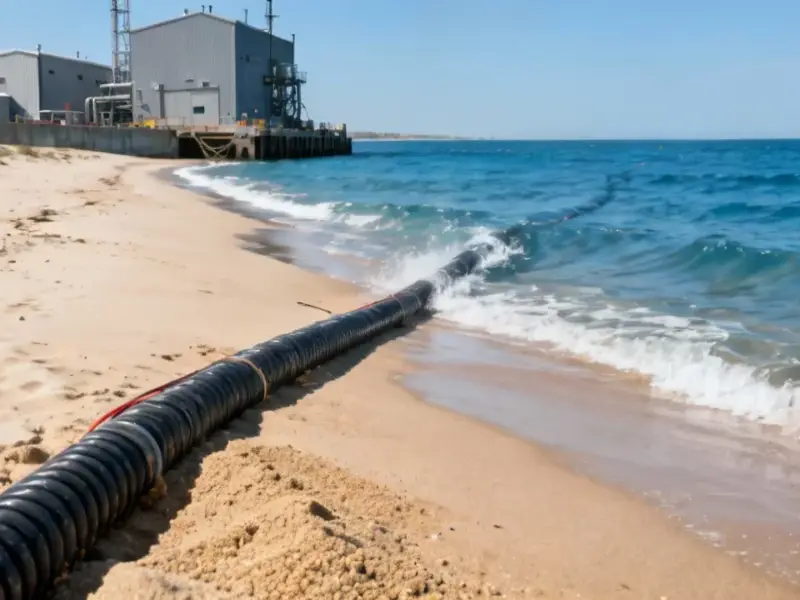
According to TheRegister.com, cloud storage provider Backblaze has begun publishing a quarterly Network Stats report, with its Q4 2025 data revealing a major shift. The…

According to DCD, Amazon is in active talks to invest a staggering $50 billion in OpenAI, as part of a larger $100 billion funding round…

According to Wccftech, Ubisoft announced a "major reset" last week, restructuring the entire company into five 'Creative Houses' and creating…

According to Tech Digest, TikTok's new American entity, TikTok USDS Joint Venture LLC, has updated its privacy policy to allow…

According to TheRegister.com, Microsoft is investigating reports that its January 2026 security updates are causing a "limited number" of physical…

According to Reuters, the CES 2025 show in Las Vegas was overwhelmingly dominated by AI-powered hardware, marking a major shift from software to "physical AI"…
According to Phoronix, a fresh benchmark showdown in late 2024 and early 2025 pitted AMD's 128-core EPYC 9755 "Turin" processor against Intel's 128-core Xeon 6980P…
The Energy Industry’s AI Paradox The energy sector finds itself at a fascinating crossroads. While facing unprecedented challenges from climate…
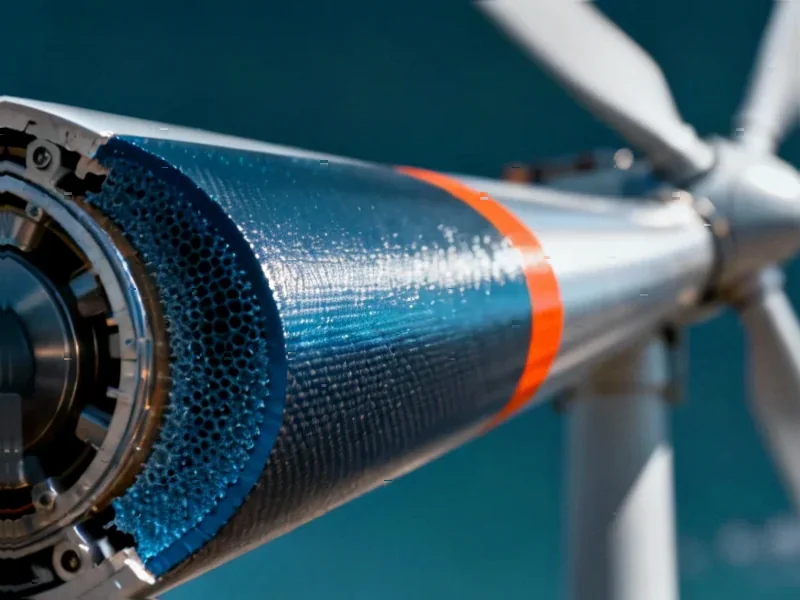
Offshore wind developers are pushing for new protective coating standards as existing protocols fall short for unmanned turbines in extreme marine environments. With maintenance windows limited by weather and costs reaching $350,000 daily, the industry requires coatings validated for 35-40 year lifespans rather than traditional 25-year benchmarks.
As offshore wind energy expansion accelerates globally, industry analysts suggest the sector faces unique infrastructure protection challenges unlike traditional offshore operations. Unlike frequently inspected oil and gas platforms, offshore wind farms remain unmanned and inaccessible for extended periods, exposed to what reports describe as some of the world’s most aggressive marine conditions.
The Accidental Discovery Reshaping Optical Computing In what could become one of science’s most impactful fortunate accidents since the discovery…
The LLVM compiler infrastructure has integrated long-awaited optimizations specifically targeting AMD’s Zen 4 processor architecture. These improvements are expected to deliver measurable performance gains across various computing workloads. The enhancements come alongside significant updates to AMD’s Fortran compiler for GPU offloading capabilities.
According to reports from the developer community, the LLVM compiler infrastructure has recently landed significant tuning optimizations specifically designed for AMD’s Zen 4 processor architecture. These optimizations, described by sources as “long overdue,” are expected to provide measurable performance improvements for applications compiled through the LLVM toolchain.
Quantum Computing Meets Real-World Chemistry Google Quantum AI researchers have achieved a significant milestone by demonstrating how quantum computers can…
Scientists have demonstrated that out-of-time-order correlators maintain sensitivity to quantum dynamics even at extended timescales. The experimental approach reveals constructive interference patterns previously hidden in quantum systems. These findings suggest new pathways toward practical quantum advantage.
Researchers have developed an innovative approach to probe quantum many-body systems using time-reversal protocols, according to recent reports in Nature. The experimental work, conducted on superconducting quantum processors, demonstrates that second-order out-of-time-order correlators (OTOC(2)) remain sensitive to underlying quantum dynamics even at long timescales where conventional measurements fail. Sources indicate this breakthrough could enable access to previously inaccessible quantum correlations in highly entangled systems.
A groundbreaking study reveals the creation of a metallic p-wave magnet with a commensurate spin helix structure. The research demonstrates unprecedented control over quantum states in magnetic materials, potentially opening new avenues for advanced electronics.
Scientists have reportedly achieved a significant advancement in quantum materials research with the discovery of a metallic p-wave magnet featuring a commensurate spin helix structure, according to research published in Nature. The findings suggest new possibilities for controlling electronic states in magnetic materials, with potential implications for next-generation computing and quantum technologies.
Scientists have introduced a quantum algorithm that demonstrates superpolynomial speed-up for optimization problems. The approach combines quantum Fourier transforms with classical decoding methods to solve complex computational challenges more efficiently than classical algorithms.
Researchers have developed a new quantum algorithm that reportedly achieves superpolynomial speed-up for optimization problems, according to a recent Nature publication. The algorithm, termed decoded quantum interferometry (DQI), uses quantum Fourier transforms to transform optimization challenges into decoding problems that can be solved efficiently.